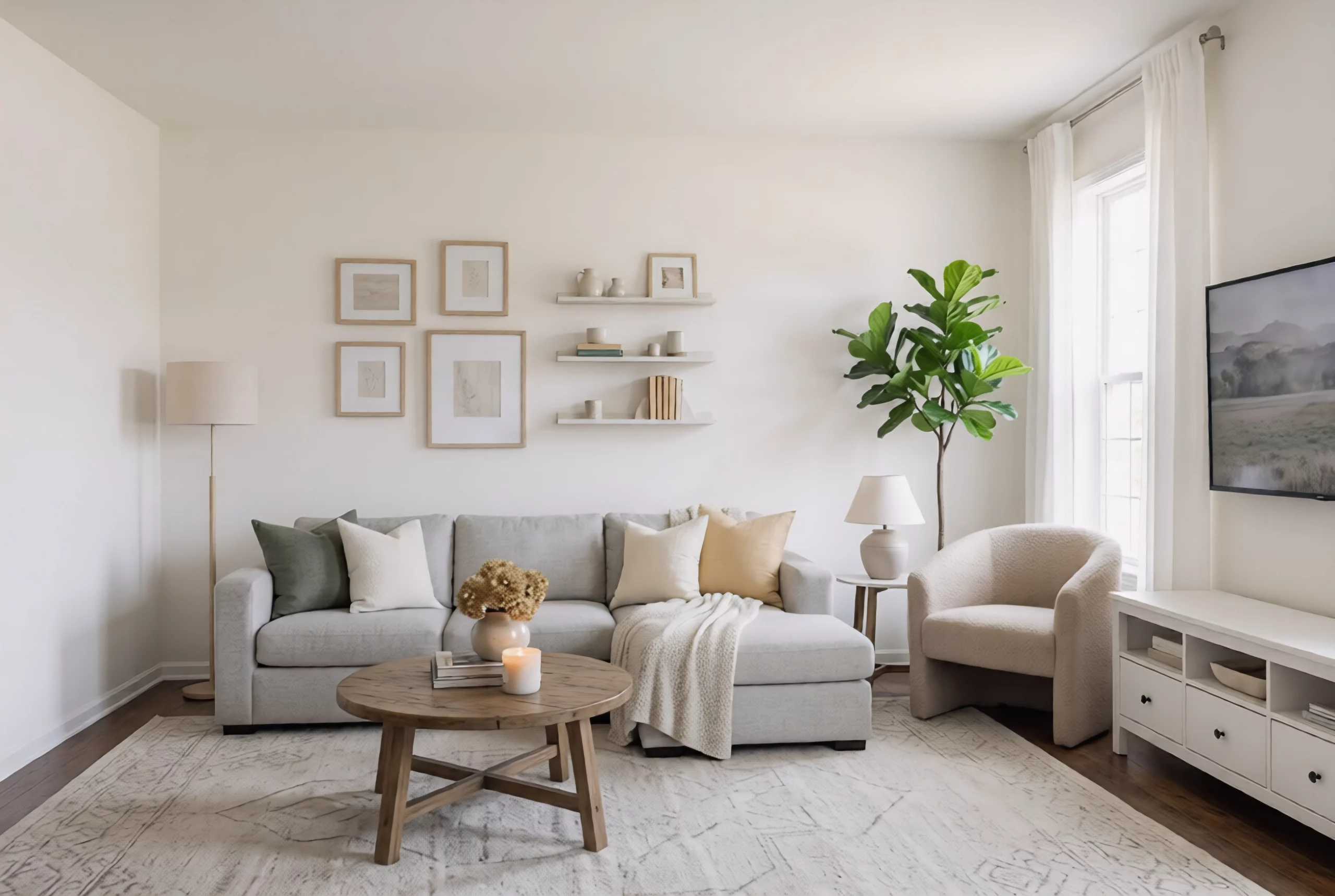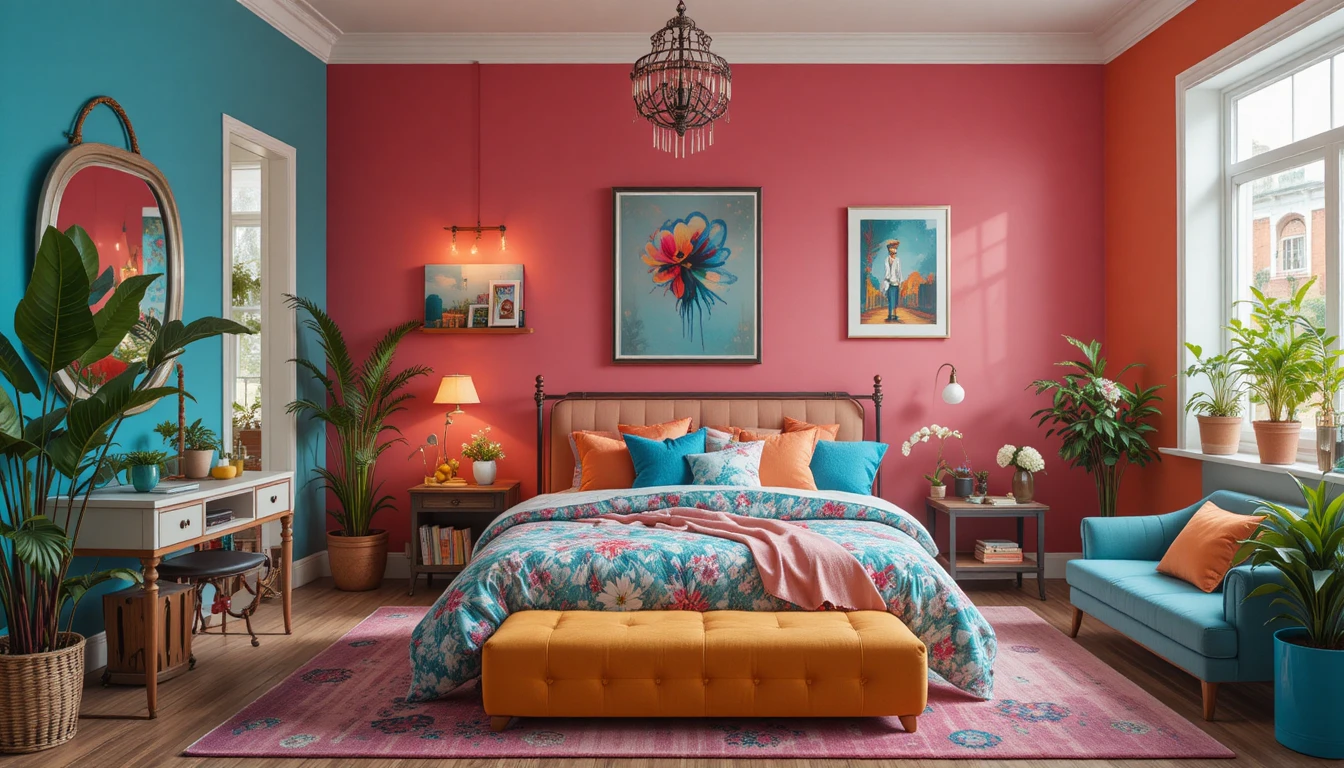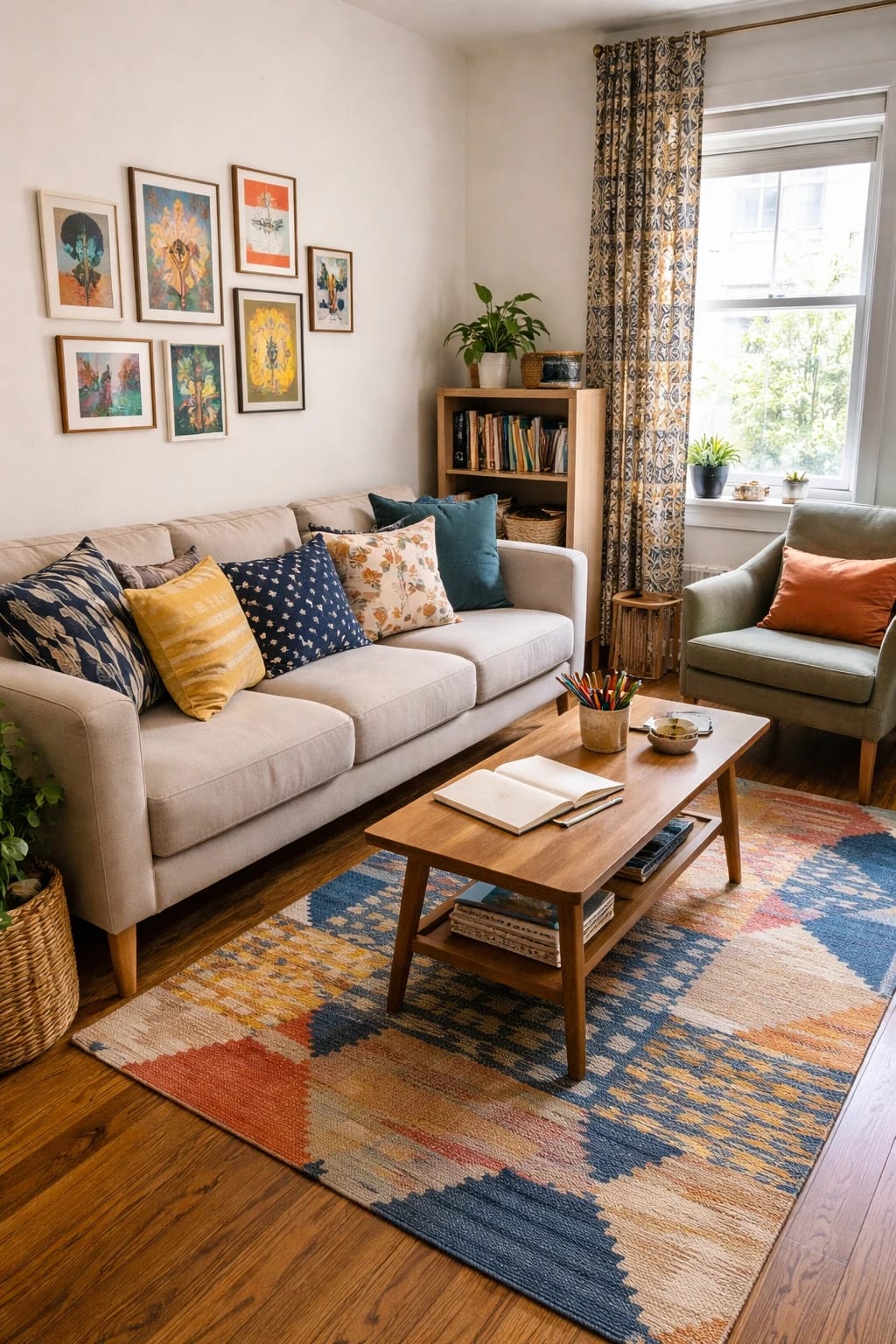
I’ve redecorated my living room more times than my wife thinks is reasonable. Here’s what I actually learned from doing it wrong a bunch of times first.
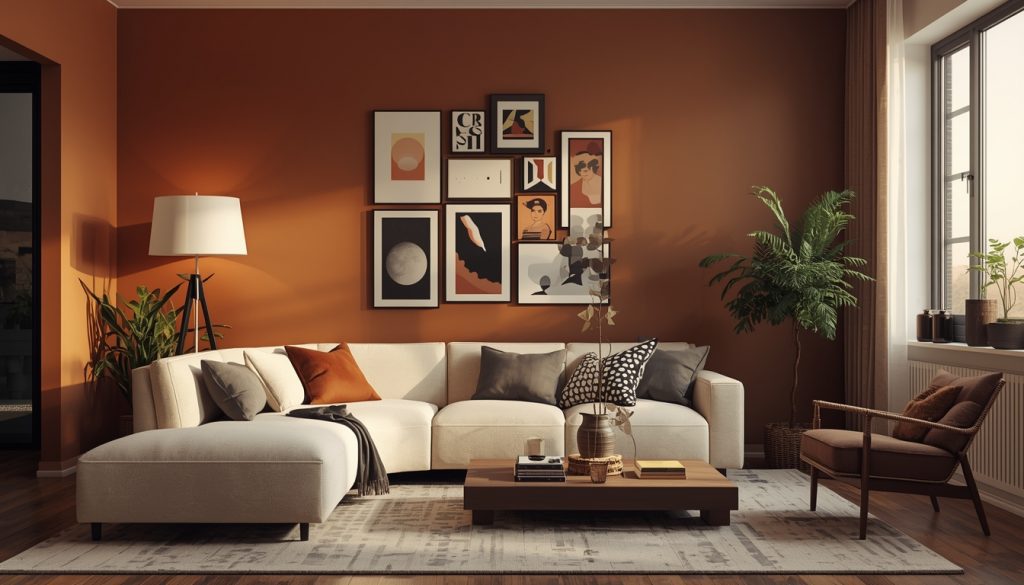
Okay so I have to be upfront about something. My living room looked terrible for about two years and I had no idea why. I kept buying stuff — cushions, throws, a new rug, a plant I eventually killed — and nothing really changed. The room just looked like a collection of things I owned rather than an actual place where someone lived on purpose.
My mate Jake came over one evening and said, pretty bluntly actually, “your living room looks like a hotel lobby that gave up.” Which. Yeah. That was fair.
So I started paying proper attention to what was wrong instead of just buying more things to fix it. And I found 15 changes — some cost nothing, some cost a bit, one cost more than I’d like to admit — that actually shifted the whole room. These are proper modern living room decor ideas that I’ve tested in my own place, not stuff I pulled off a mood board and dressed up as advice.
If your living room looks fine in photos but feels wrong in person, this is for you.
Quick honest bit before we start
I used to think modern meant expensive. Like you needed a specific sofa from a specific brand and everything had to be matching and deliberate and slightly uncomfortable-looking. That’s not it at all.
What modern actually means (at least the version that actually looks good and feels like a home) is this: things were chosen, not just accumulated. There’s warmth from materials rather than from warm colors. One thing per area of the room is doing the interesting visual work, and the rest is quiet. And the lighting — this is the big one — isn’t just a ceiling bulb trying to illuminate the entire room at once.
That’s it. Those four things. Everything below is an application of at least one of them.
Color ideas that actually look modern living room decor ideas right now
I had a grey living room for ages. Like, fully committed grey — grey walls, grey sofa, grey rug. Very 2016. It looked fine in 2016 and looked dated and cold by 2023. Here’s what I switched to, and why it made such a dramatic difference.
01- Ditch the cool grey — go warm sand, mocha, or terracotta instead
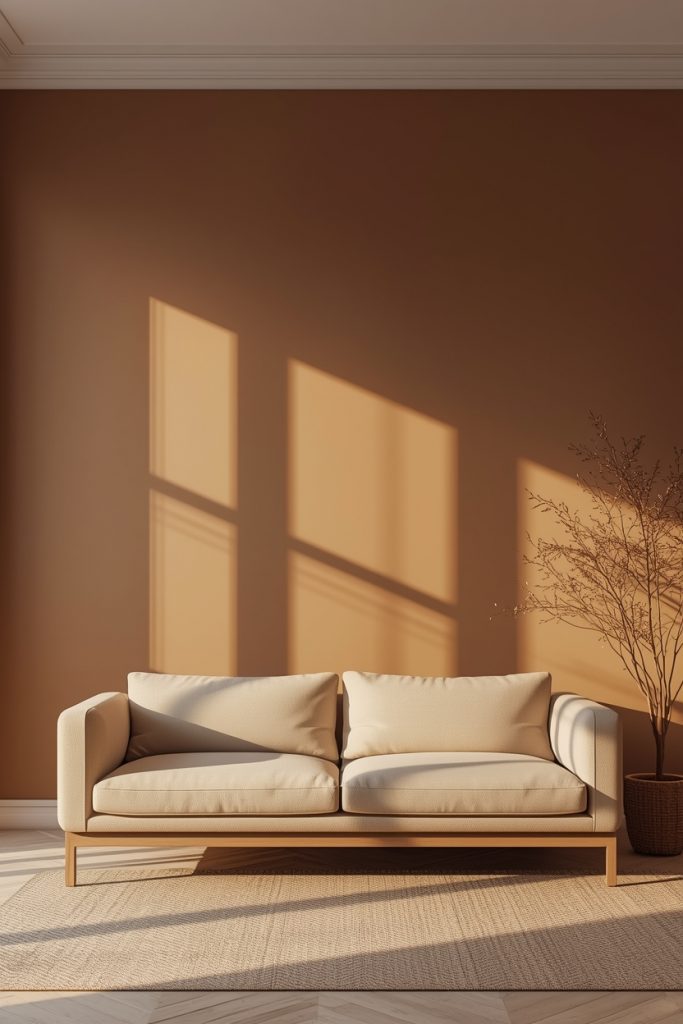
I picked up a tester pot of warm sand paint from the hardware store — like a creamy warm beige, not yellow, just warm — and slapped it on one section of my living room wall next to my cool grey. The difference was so obvious I didn’t even finish the tester patch before I went back and bought the full tin.
Cool grey walls make a room feel like a dentist office that’s trying to seem relaxing. Warm tones — sandy beige, mocha brown, soft terracotta — make everything in the room look better. My sofa looked like a different sofa. Same sofa. The wall color was doing all of it. My brother-in-law came over the week after I repainted and asked if I’d bought new furniture. I hadn’t bought anything. Paint. That’s it.
What I used: Farrow & Ball “Elephant’s Breath” is the popular one but honestly the Dulux equivalent called “Natural Hessian” is about a quarter of the price and looks almost identical in natural light. Don’t tell the Farrow & Ball people.
02- Paint one wall dark — leave the other three completely alone
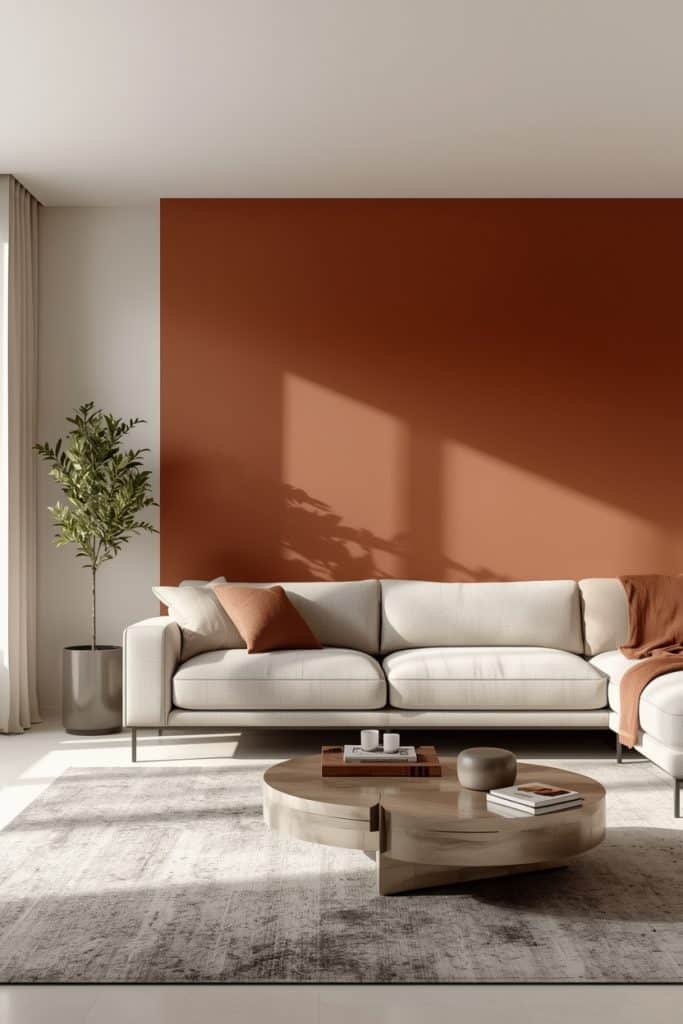
My wife was convinced this was going to make the room smaller. I was mostly convinced too. We painted the chimney breast (the wall behind the sofa) a deep warm rust — not orange, more like a very dark terracotta — and both of us stood there afterwards not saying anything for a bit because it looked so good.
The dark wall gave the sofa area a sense of being a proper zone, like the wall was wrapping around the seating from behind. The room didn’t get smaller. If anything it felt more defined and intentional. The trick — and this is important — is not doing it on all four walls. One. The contrast between the one deep wall and the three lighter ones is exactly what makes it work. Do all four and you’re in a cave. Do one and you have a room that looks properly designed.
For renters: A large fabric wall hanging in a dark warm tone in front of the sofa wall achieves maybe 70% of the same effect. Not quite the same but genuinely close enough that I’d try it before accepting I couldn’t do anything.
03- Try using four shades of one color instead of mixing different colors
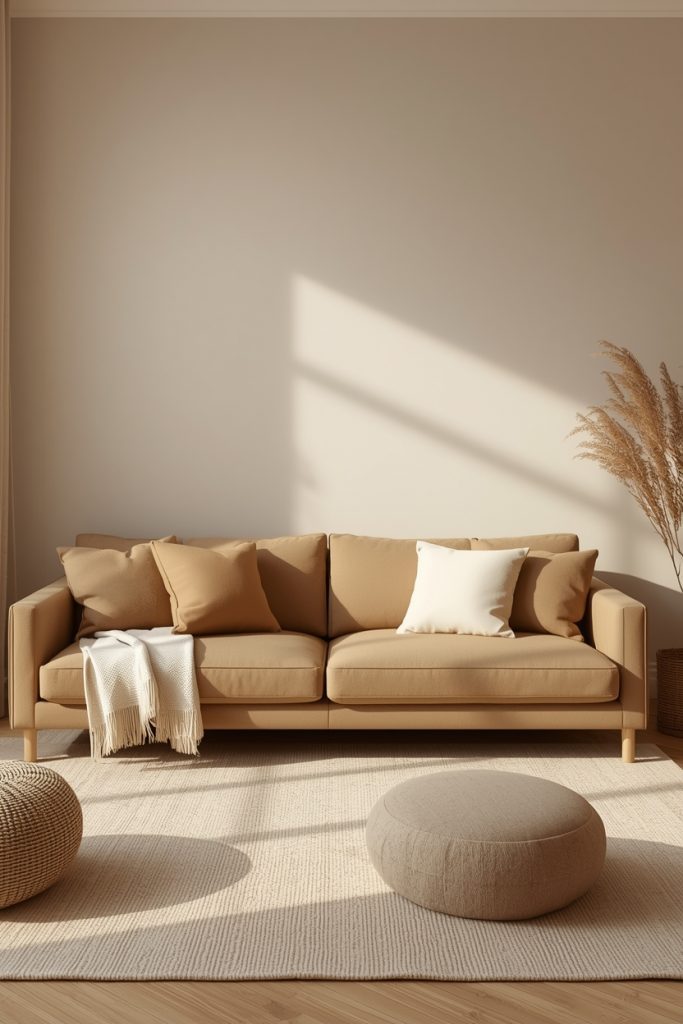
I called this “the boring approach” when I first heard about it and then tried it out of desperation after my third attempt at mixing cushion colors looked like a jumble sale. Four shades of the same warm beige family — cream on the walls, oat on the sofa, warm sand on the rug, camel on the cushions. Same family. Different depths.
The room looked like someone who knew what they were doing had designed it. Which — full disclosure — was not what had happened. What had actually happened was I couldn’t make decisions anymore and just went all-beige out of exhaustion. But it worked. The tonal thing reads as confident and deliberate even when the decision was made in a state of mild interior design paralysis.
Natural wood and matte black as accents. Those two work across any warm tonal palette without needing to match anything specifically.
You may also like: 30 Cozy Small Studio Apartment Ideas – 23 Green and Beige Living Room Designs – 25 Small Apartment Living Room Ideas
Furniture changes that made the biggest visible difference
I bought the wrong sofa twice. First one was too big — a massive L-shape that took over the whole room. Second one was too boxy and stiff and looked like it belonged in a show apartment that nobody actually lived in. Third one was right. Here’s what I learned across those three very expensive lessons.
04- Get a sofa with curved arms — hard rectangular ones look dated now
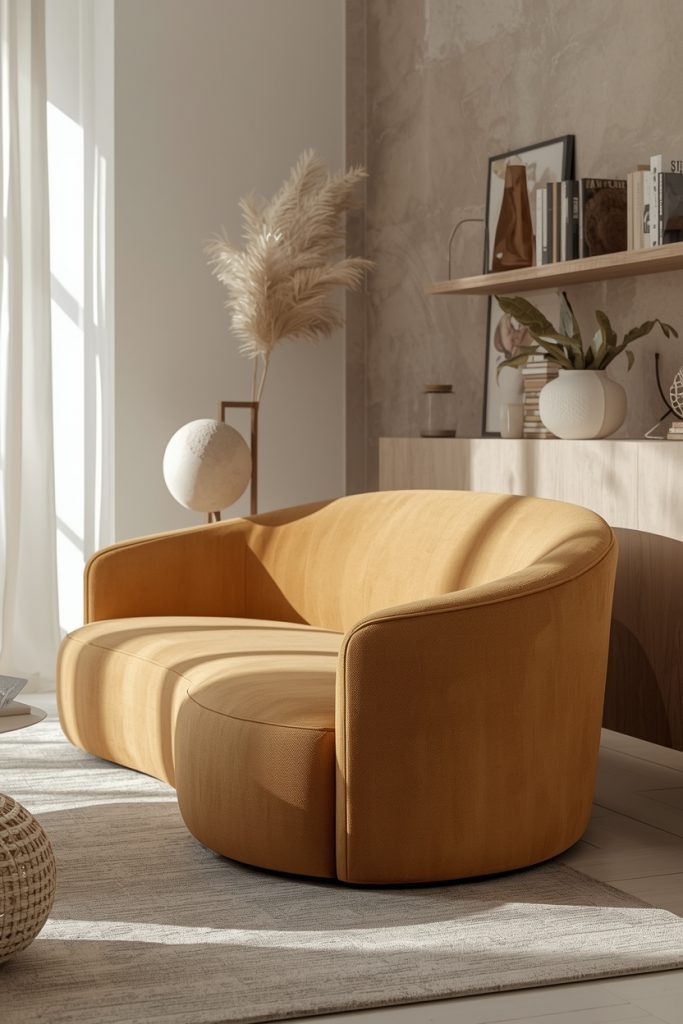
The boxy, angular sofa I bought in 2020 — very straight arms, very rectangular, very “look at how modern and restrained I am” — started looking weirdly dated about two years after I bought it. Not old exactly. Just stiff. Like it was trying too hard to be serious.
I replaced it with a curved-arm version in warm oat fabric and the whole room relaxed. That’s the best way I can describe it. Same room, same everything else, different sofa shape — the room went from tense to relaxed. Curved furniture does that. It’s softer and more human than sharp corners everywhere and it photographs really well if you’re ever posting your space anywhere.
You don’t have to replace the whole sofa immediately either. A curved accent chair in a corner is enough to introduce the organic shape and see how it feels. That’s what I’d do now if I were starting over on a limited budget — chair first, sofa swap later when it made more financial sense.
05- Bin the glass coffee table — get something with actual material presence
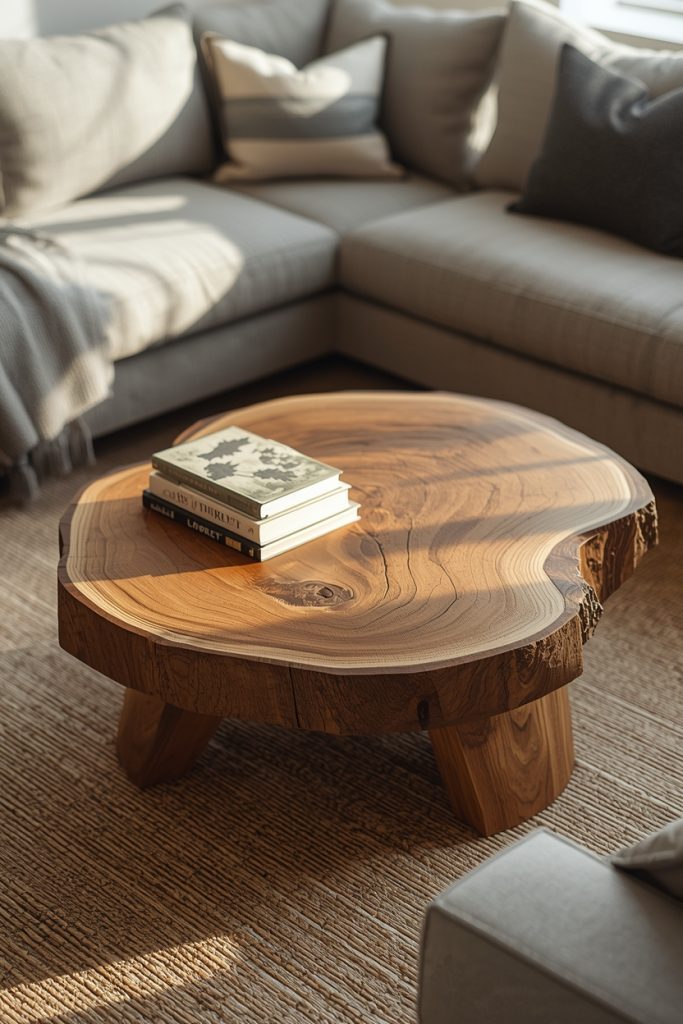
I had a glass coffee table for four years. Four years of fingerprint smears every single day. Four years of it being technically invisible — like it was barely there, which I’d heard was the point. “Glass makes a small room feel bigger.” Maybe. But it also makes the center of your living room feel like there’s nothing there worth looking at.
I found a solid mango wood table at a local market — chunky legs, natural grain showing, slightly uneven edges. Paid$95 for it (the seller wanted$120 but I felt confident that day). It became the most-commented-on thing in my living room immediately. People would pick up their drink and then look at the table properly like they’d just noticed it was interesting. A glass table never got that. Glass tables are invisible in the wrong way — they hide instead of contribute.
Materials that work: Solid wood with visible grain. Travertine stone. Concrete. Raw mango wood. Any of these read as material-honest and contemporary. Stay away from high-gloss anything — that’s ageing fast.
06- Stop filling shelves completely — the gaps are the whole point
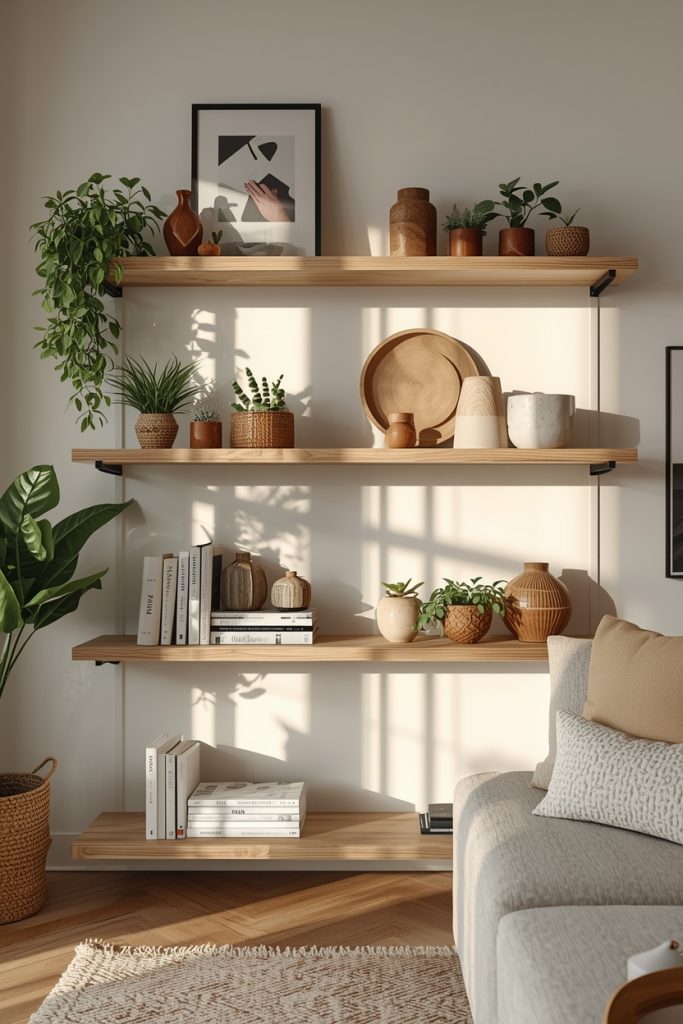
My shelves used to look like a charity shop had moved in. Every inch packed with books, bits, candles, photos, a clock that stopped working in 2019 that I just never took down. It looked busy in a way that made the room feel smaller and more stressed than it actually needed to be.
My wife suggested editing it down. I thought she meant removing one or two things. She meant removing about half. We argued about it. She was right, obviously. Fill roughly 70% of each shelf and leave the rest deliberately empty. Group the objects you do keep in odd numbers — a cluster of three things at different heights looks intentional. One object sitting alone looks forgotten. An empty stretch of shelf beside a cluster looks considered. That’s the thing I didn’t understand: the empty space isn’t wasted space, it’s what makes the stuff you kept look chosen.
07- Lean a big mirror opposite the window — not just wherever it fits
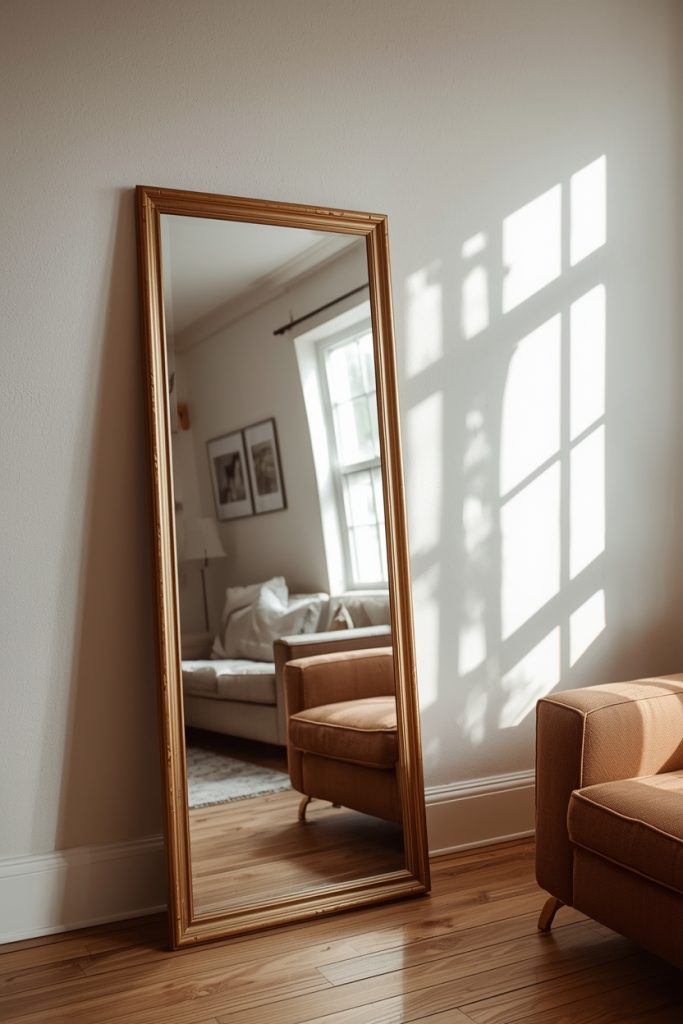
I had a large mirror for two years leaning against the wrong wall. Just wherever it fit when I moved in, which happened to be a wall that faced another wall. So the mirror reflected a wall. Very useful. Very interesting to look at.
Moving it to the wall directly opposite the main window changed how bright the room felt for basically the entire day. It catches the morning light and throws it across the back half of the room, which was previously quite dim. In the afternoon it bounces direct sunlight across the ceiling in a way that makes the room feel almost twice its actual size. Position matters way more than the size of the mirror, though bigger is generally better. Lean rather than hang — casual and renter-friendly, and you can shift it around easily if the light changes seasonally.
Lighting ideas that genuinely changed how my living room felt
The ceiling light in my living room — the one that came with the flat, the standard overhead fitting with a cheap shade — was the single biggest problem in the room for about two years before I figured that out. Everything else I tried to fix was working against it. You can have great furniture and the wrong light makes it all look flat. Here’s what finally sorted it.
08- Check your bulb packaging — if it’s above 3000K, change every single one
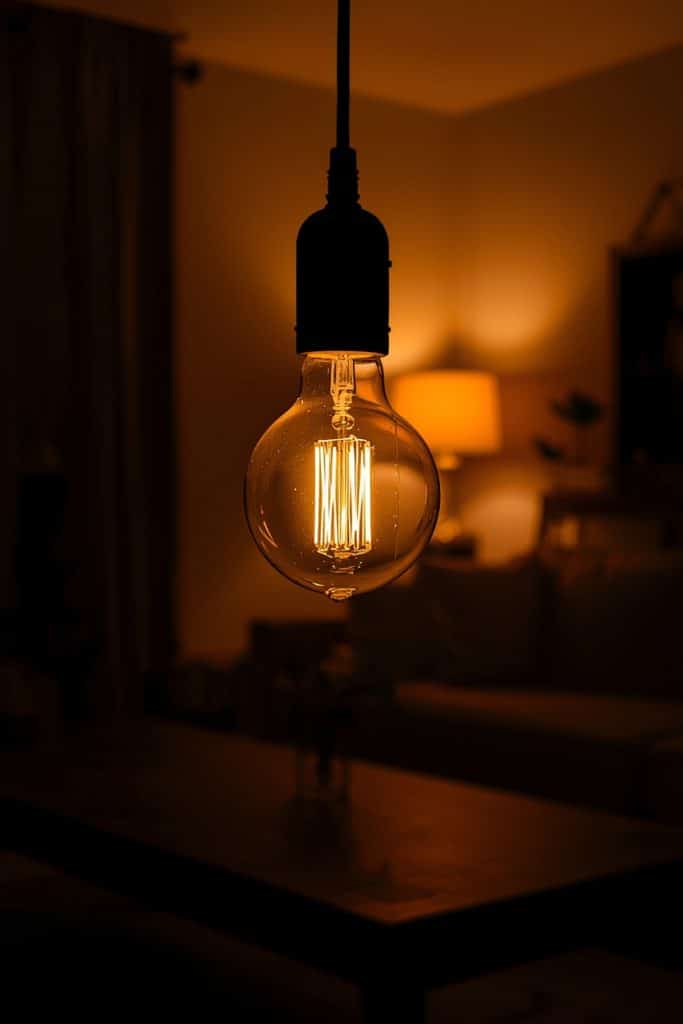
Go and look at your lightbulbs right now. Seriously, do it while you’re reading this. Find the ones in your living room lamps and see what number it says. If it says 4000K or 5000K or “cool white” or “daylight” — those are your problem.
2700K is warm white. That’s what you want in a living room. Everything below 3000K reads as warm and residential. Everything above reads as an office or a kitchen or a place where tasks happen, not a place where you relax. I changed every bulb in my living room to 2700K in about ten minutes and then stood there for a while just looking at how different it was. Same room. Completely different atmosphere. My dad came round the next day and said the room looked “more expensive somehow.” It was twelve pounds of lightbulbs.
09- Move lamps to corners and behind the sofa — not the center of side tables
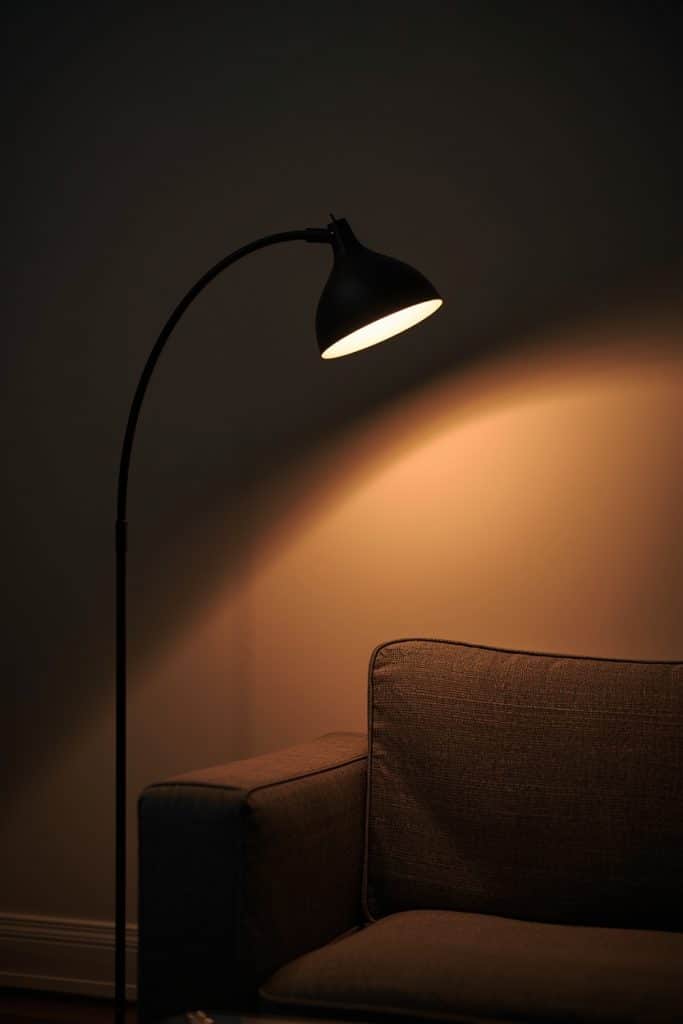
I had my floor lamp sitting in the middle of the room, roughly equidistant from everything, lighting nothing particularly well. It was like a lamp that had been placed by someone who didn’t know where to put it. Which is exactly what had happened, because that someone was me on moving day when I just wanted to be done.
Moving it to the corner behind the sofa (an arc lamp works really well here — arcs over the seating and puts the light right where you sit) changed the whole character of the room in the evening. Light from a corner pushes upward along the walls and creates warmth and shadow simultaneously. Light in the center of a room just floods everything evenly and creates no atmosphere at all. Corner lamps. Behind the sofa. That’s where they go.
The specific lamp: I use a matte black arc floor lamp — about 175cm tall with a dome fabric shade. Put it behind the left end of the sofa so it arcs forward over the seating. It’s the first thing guests comment on. Not “nice lamp” — more like “this room feels really good, what have you done in here?”
10- Get a plug-in dimmer — one for each main lamp if you can
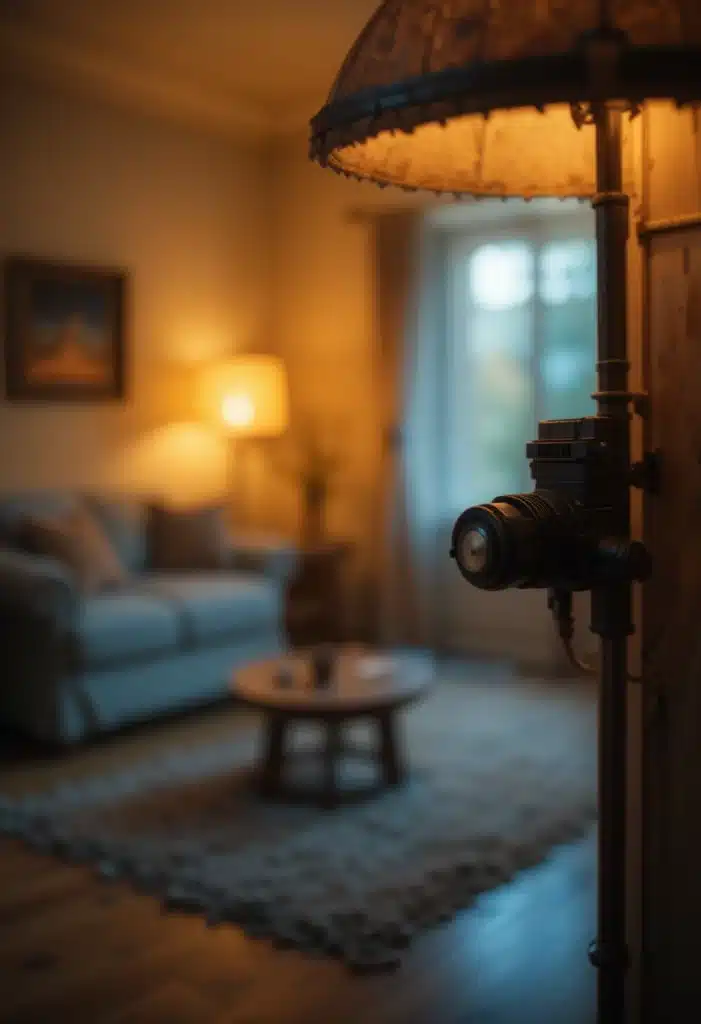
This is embarrassingly cheap for how much it changed the room. A plug-in dimmer is a little device that sits between the lamp and the wall socket. Plug it in, plug the lamp into it, turn a dial, and you now have anywhere from full bright to just-barely-on. It costs about ten to fifteen pounds and takes about thirty seconds to install.
Before I had it: one setting. Light on, full brightness. Before bed, watching a film, having people over — same setting. The room couldn’t adapt to anything. With the dimmer: low in the morning while I’m still waking up, medium while working, down to about 20% in the evening. The same lamp creates four completely different room atmospheres. I genuinely use it every single day. If I could only pick one thing on this list to recommend to someone doing their living room on a small budget, it’s this. It’s absurdly good value.
Texture ideas that make a modern living room feel genuinely warm
This is where I got modern design most wrong. I thought modern meant smooth and minimal and clean-lined. So I had a room full of smooth things and clean lines and very little texture anywhere. It looked precise. It felt completely cold. The warmth in a contemporary room comes from materials — the feel of them, the look of them, the way they age.
11- Replace polished and shiny surfaces with raw natural ones
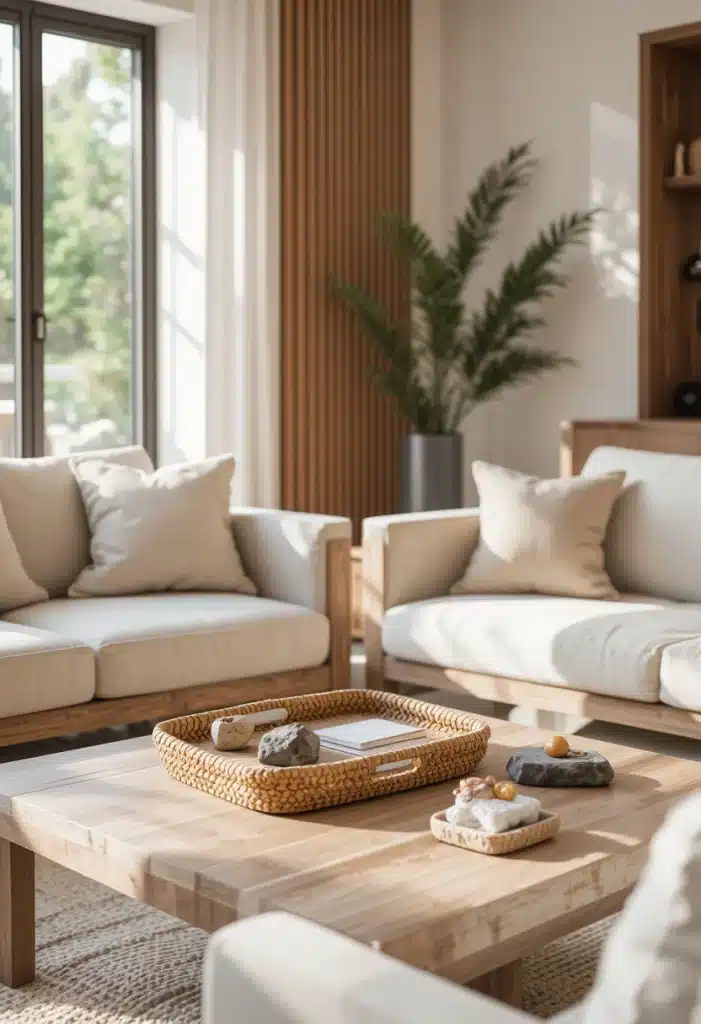
My old living room had: a glass coffee table, a high-gloss TV unit, a lacquered side table, and chrome lamp fittings. Everything was shiny and smooth and reflecting everything else. The room looked like it was in a constant state of being photographed for a 2014 property listing.
Switching to matte, raw, natural surfaces changed the room completely. Solid wood with grain showing instead of lacquered MDF. A rattan tray on the coffee table instead of a chrome one. Linen cushion covers instead of polyester. A stone coaster rather than a ceramic one. None of these are expensive swaps individually. Collectively they shift the room from shiny-modern to warm-contemporary, which is a completely different thing and one that doesn’t date in the same way.
12- Add texture to the main wall — limewash paint is easier than it looks
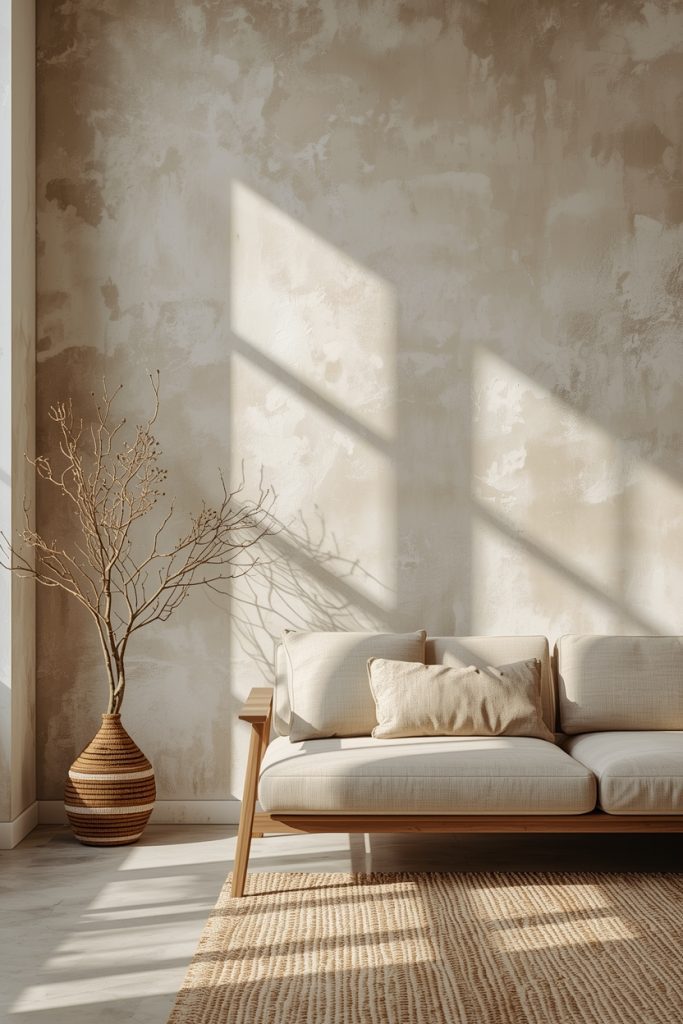
I’d been looking at Venetian plaster finishes in magazines for about a year thinking it was something professionals did and I’d never be able to. Then I found out about limewash paint, which creates a very similar chalky textured effect and you apply it yourself with a wide brush in loose overlapping strokes. I watched one YouTube video and did the chimney breast wall on a Sunday afternoon.
It took about three hours. Dried in two. Cost me around$40 for enough paint to cover the whole wall twice. My wife thought I’d paid someone to come in and do it and was quietly annoyed about what she assumed was the cost until I told her. The wall catches light differently throughout the day — soft in the morning, almost luminous in the afternoon — in a way that flat paint just can’t do. One wall. Big difference. Completely achievable without being a DIY person (I am not a DIY person).
What I bought: Lick Limewash paint in “Hazel.” Applied with a 4-inch brush in loose crosshatch strokes. Two coats. Let each coat get tacky before the next one. Don’t overthink the technique — the imperfection is the look.
13- Mix four fabric types on the sofa — same color family, different textures
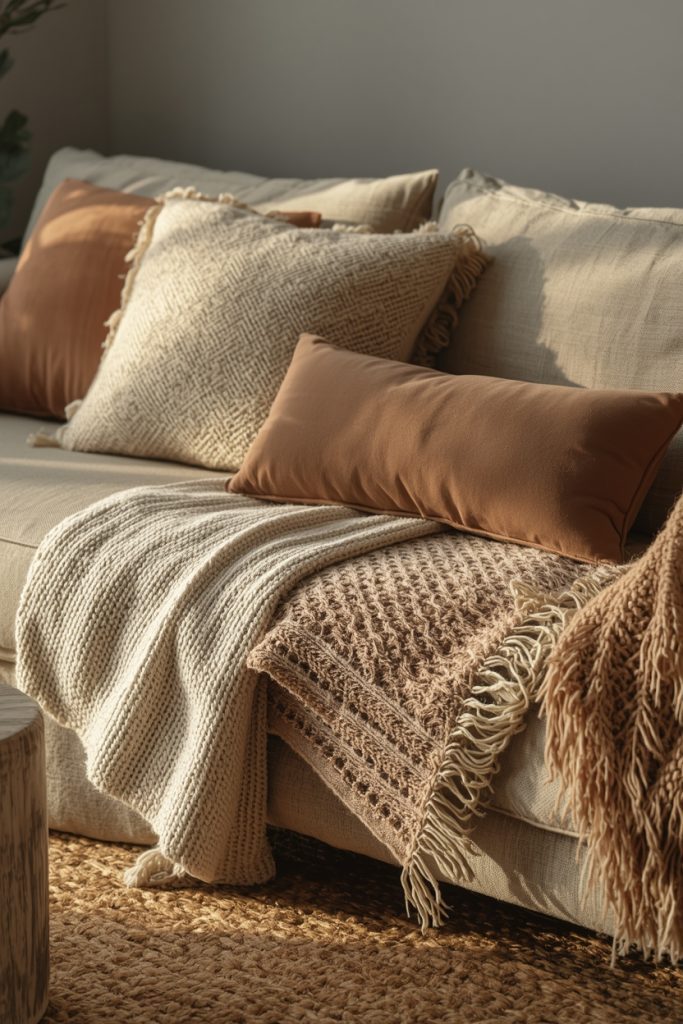
For ages I had matching cushions on my sofa. All the same fabric, all the same size, all bought as a set from the same place at the same time. They looked fine. They looked like I hadn’t really thought about the sofa much. Which I hadn’t.
Swapping to mixed textures in the same warm beige-terracotta palette changed the sofa completely without changing anything structural. Currently on mine: a linen throw (smooth, slightly rough weave), two boucle cushions (nubby, catches light differently), one plain heavy cotton cushion (matte, different scale), and one velvet lumbar (directional sheen, different shape entirely). None of them match. All of them belong to the same color story. The sofa looks genuinely considered now — like something a person with taste owns rather than something a person grabbed off a shop floor.
The two details that tie everything together
These last two sound simple. One of them is extremely simple. Both of them made a bigger difference than things that cost four times as much.
14- Get one large plant — not five small ones scattered around
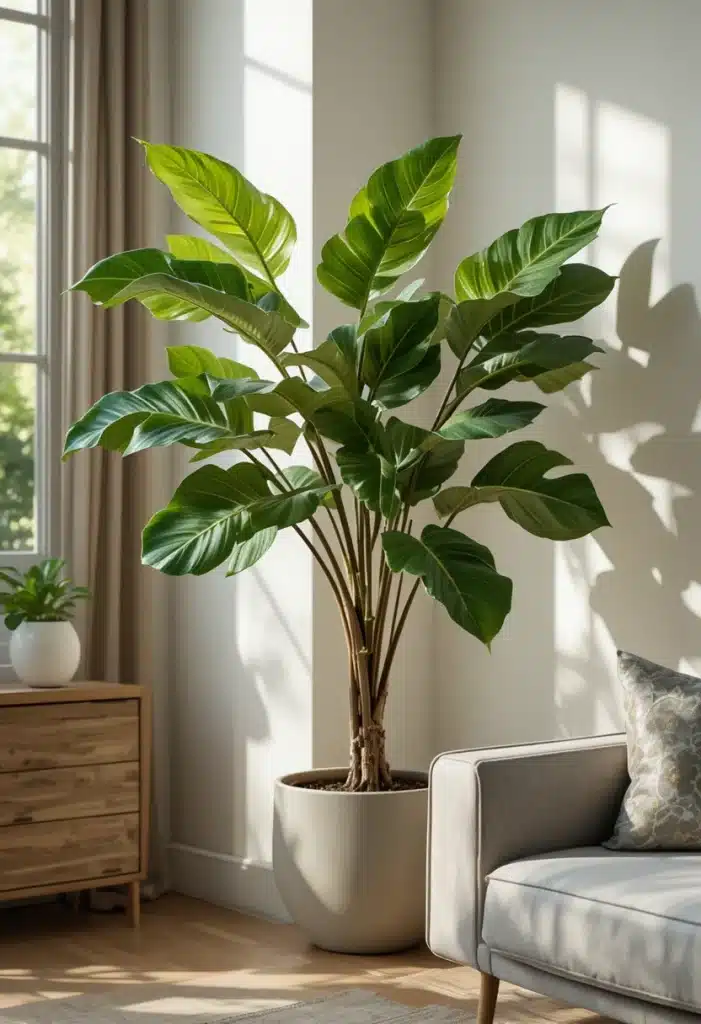
I had a phase where I bought lots of small plants and put one on every surface. It looked like I was running a very disorganized garden centre out of my living room. None of the plants were big enough to matter individually and together they just created visual noise.
One large plant in a corner — something that reaches at least to chest height — does more for a room than five small ones combined. I have a fiddle leaf fig that I bought for about$30 from a market two years ago. It’s now about 160cm tall. It fills a corner that used to have literally nothing in it. From the sofa it’s the first thing you see when you look to the left. It’s alive and it moves slightly when the door opens and it makes the room feel like someone put real thought into it. Which I did. One plant. It took years of small plants first to learn that lesson.
15- Replace the grid of small prints with one properly big piece of art
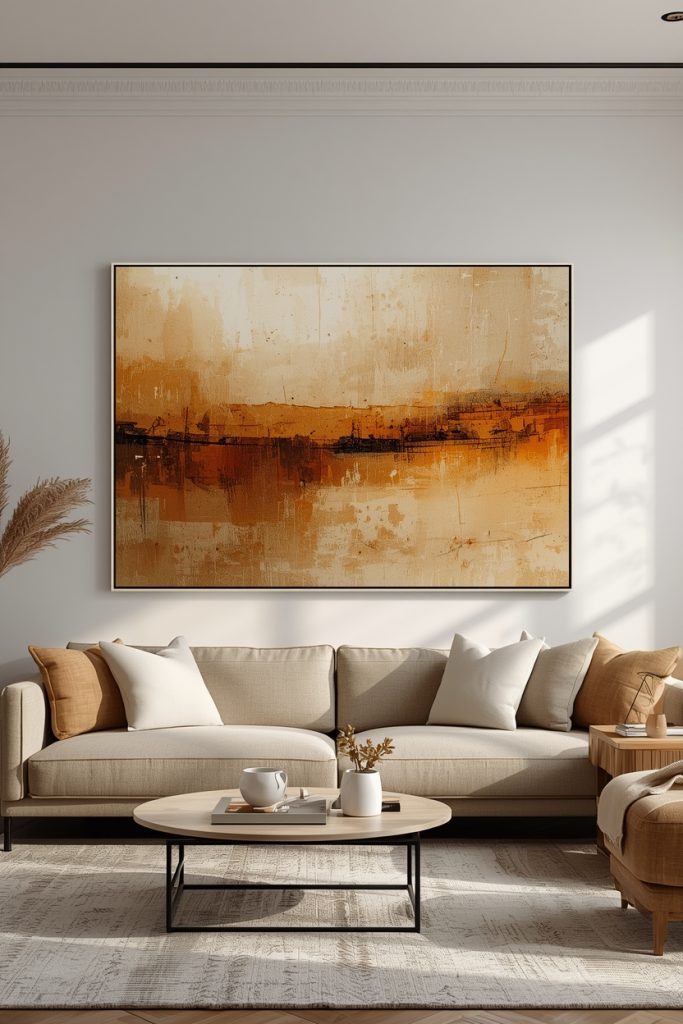
I had six prints in a grid above my sofa. Symmetrical. Evenly spaced. All roughly the same size. It looked organized and said absolutely nothing about me or my taste because I’d chosen them all for how they looked together in a set rather than because any one of them actually meant something or was interesting enough to stand alone.
I took all six down and put one up. A single canvas, 90cm x 120cm, in warm abstract brushstroke tones — sandy, terracotta, warm brown. I had the file printed at an online print shop and stretched it myself on a stretcher frame kit I found on Amazon. The file cost €7 on Etsy. The print and frame kit cost around$55 together. One piece. Way more presence than six medium ones ever had.
Hang it lower than feels right by the way. Standard instinct is too high. Bottom of the frame should sit at roughly seated eye level — about 145–150cm from the floor when you’re measuring to the middle of the piece. Higher than that and it disconnects from the sofa and just floats on the wall.
The rule I use now: If I wouldn’t hang it alone and still be happy with how it looked, it’s not strong enough. Every piece of art in the room has to be able to hold its own. If it only works as part of a grid it’s probably not doing enough work individually.
Where I’d spend money first — if I was starting from scratch
Not doing everything at once is actually the right approach. The rooms that look the most considered are almost never the result of one big weekend purchase — they’re built up over time, one good decision at a time. But if you’re asking me where to start, here’s the exact order I’d go in.
| THE CHANGE | WHY IT MATTERS FIRST | APPROX. COST |
| 2700K warm white LED bulbs — full room swap | Changes the entire atmosphere of the room in ten minutes. Do this before anything else. | ~$10–14 |
| Plug-in dimmer — one per lamp | Lighting control that adapts the room to any time of day or mood. Absurdly cheap. | ~$10–15 |
| Statement floor lamp — arc, matte black, fabric shade | Vertical drama and proper atmospheric lighting in one piece. Corner position behind sofa. | ~$80–150 |
| Limewash paint — one wall only | Single biggest visual shift per pound spent. One Sunday afternoon. | ~$35–50 |
| Large canvas print — Etsy file + online print | Replaces a grid of small prints with one piece that actually holds the wall. | ~$50–70 |
| Mixed fabric cushion covers — 3 different textures | Sofa texture upgrade. Boucle, linen, velvet. Same color family, different surfaces. | ~$12–22 each |
| Large floor plant — fiddle leaf or rubber tree | One big plant fills a corner in a way five small ones never do. | ~$25–45 |
| Natural wood or stone coffee table | Replaces glass or high-gloss. Adds material presence to the visual center of the room. | ~$80–200 |
| Linen curtains — hung from ceiling height | Natural material on the windows. Ceiling-hung for height. Sheer for light. | ~$20–40 |
| Curved accent chair | One organic shape in a room of straight lines reads as a proper design decision. | ~$120–300 |
✅ JUST THREE THINGS IF BUDGET IS TIGHT RIGHT NOW
- Bulbs to 2700K —$12
- Plug-in dimmer —$12
- Move the furniture around —$0
Pull the sofa slightly off the wall. Put the floor lamp in the corner behind it. Change the bulbs. That’s under$25 and a couple of hours and the room will feel different tonight. Everything else builds on that.
Questions I get asked about this stuff
What actually makes a living room look modern right now?
Four things — and only one involves buying something. Every object in the room was chosen rather than just left there by default (that means editing things out, not just adding more). Warmth comes from materials rather than warm colours — wood grain, linen, stone, rattan. One thing per zone does the interesting visual work and everything around it stays calm. And the lighting is layered — multiple sources at different heights, not one overhead fitting trying to cover everything. Get those four right and the room reads as modern regardless of budget or specific pieces.
Is grey still a modern colour for a living room?
Cool grey has dated pretty quickly. It was the default modern colour from about 2012 to 2020 and it now reads as that era specifically rather than as something current. Warm earth tones — sandy beige, mocha, warm terracotta, muted olive — have replaced it. If you have grey walls and you like them, you can shift the room’s atmosphere a lot through warm-toned lighting (2700K bulbs), natural wood furniture and warm fabric soft furnishings without necessarily repainting. But if you’re starting from scratch or ready to repaint, go warm.
How do I make my living room look modern without spending much?
Three things under$30 that make the most visible difference: swap every bulb in the living room to 2700K warm white, add a plug-in dimmer to the main lamp, and rearrange the furniture so the sofa pulls slightly away from the wall and any floor lamp sits in the corner behind it rather than in the middle of the room. Those three changes address the light quality, the lighting control and the furniture layout simultaneously and the room will feel different the same evening you do them.
What furniture looks most modern in a living room right now?
Curved and organic shapes over hard rectangular ones — the stiff boxy sofa looks dated against softer silhouettes now. Natural material surfaces on the coffee table (solid wood, travertine, stone) rather than glass or high-gloss finishes. Furniture with visible legs rather than pieces sitting flat on the floor. And shelving at about 70% capacity with deliberate empty sections — the gaps are what make the objects look chosen rather than just sitting there.
What’s the difference between modern and contemporary living room design?
Technically modern design refers to mid-century movement from the 1950s and 60s — clean lines, functional pieces, not much ornamentation. Contemporary means what’s actually happening right now, which in 2025 includes organic curved shapes, raw natural materials, earth tones, living plants as design elements and textured wall finishes. Most people say modern when they mean contemporary — they want something current rather than a strict mid-century recreation. Both share the principle that deliberate editing matters as much as what you add.
Start with the bulbs. Genuinely.
I know I’ve said that already but I want to end on it because it’s the thing I wish someone had told me first before I spent money on cushions and rugs and a plant I let die. The lighting was the root of most of what was wrong with my living room and it was also the cheapest fix on the entire list.
Twelve pounds of warm white bulbs. That’s where to start. Not the sofa, not the wall color, not a new lamp. The bulbs already in your existing lamps. Change those first and see what the room tells you it needs after that.
The rest of the list is real — all of it worked for me. But some of it is expensive and some of it is slow. The bulbs are neither. Do those tonight and start from there.
📌 Pin this before you close it — come back to it section by section rather than trying to do everything at once. And if one of these made a difference in your place, stick it in the comments. I actually want to know what worked and what didn’t.