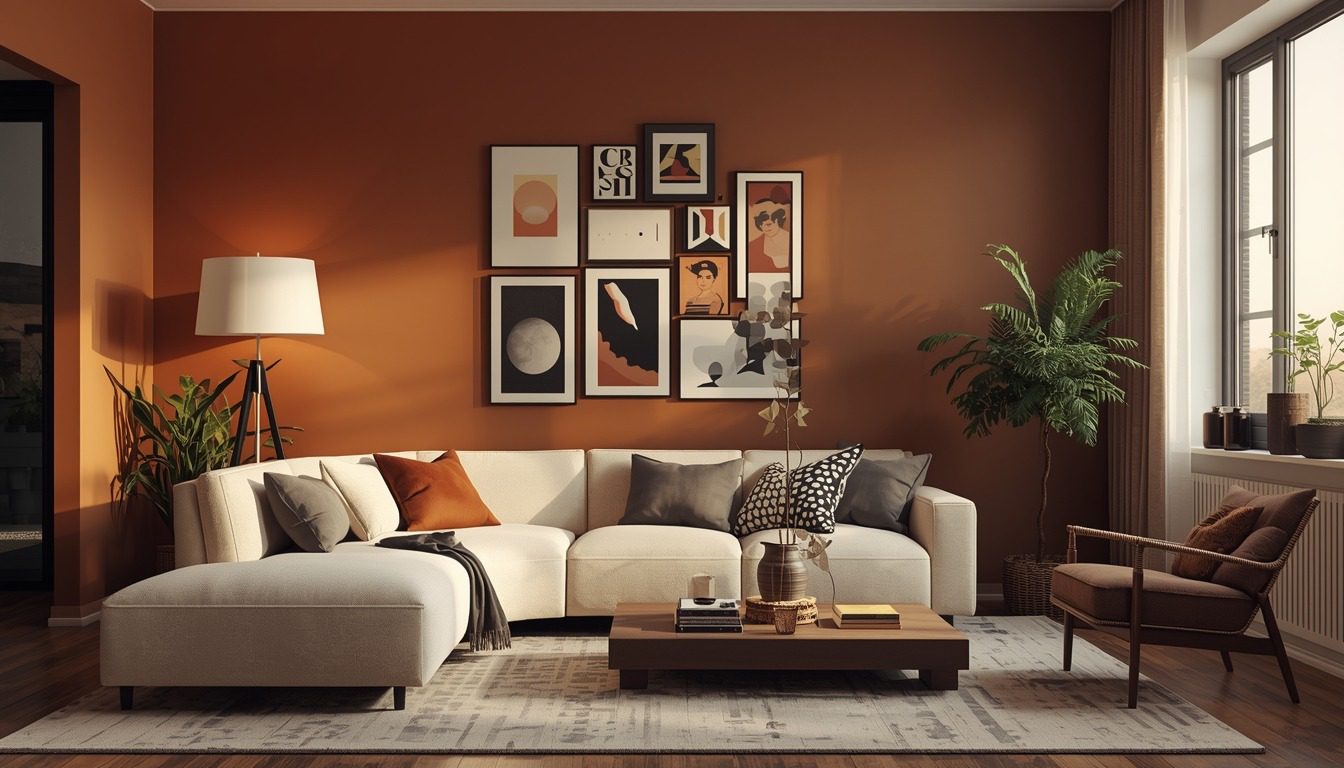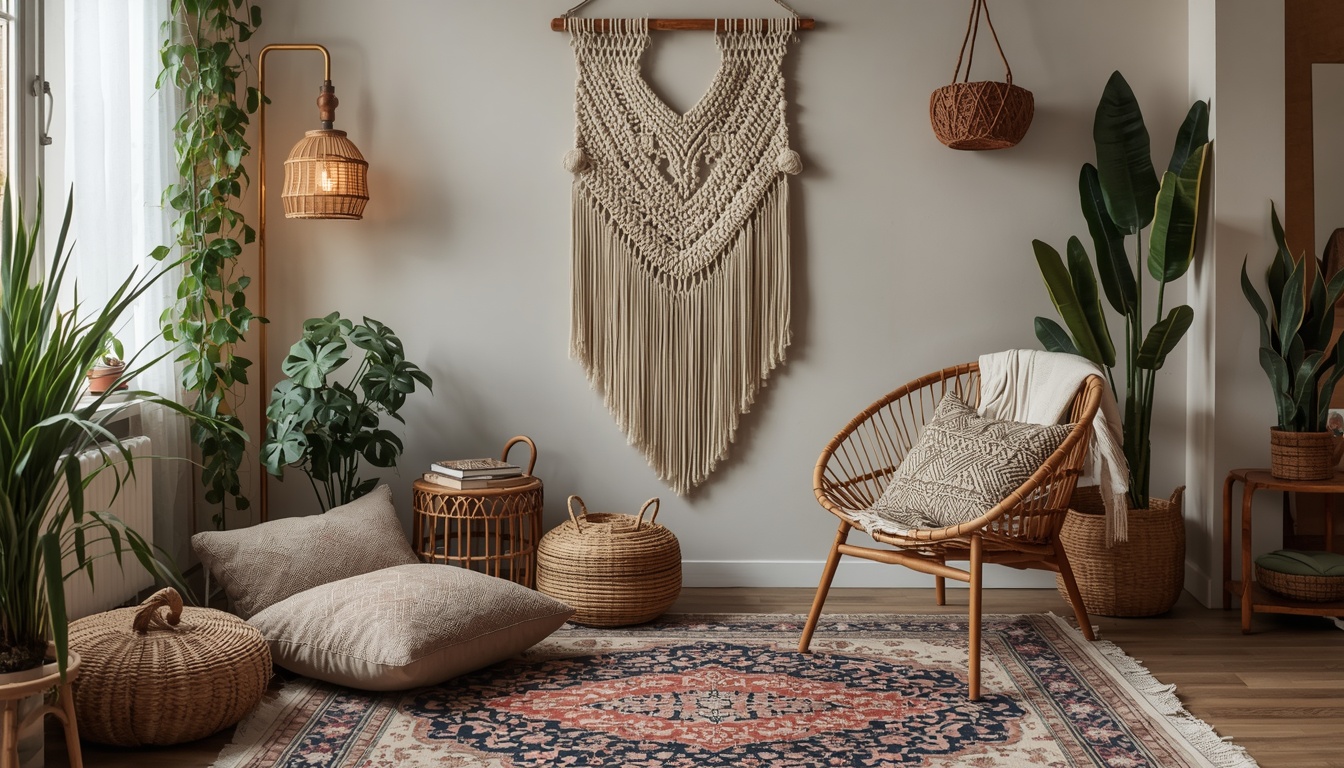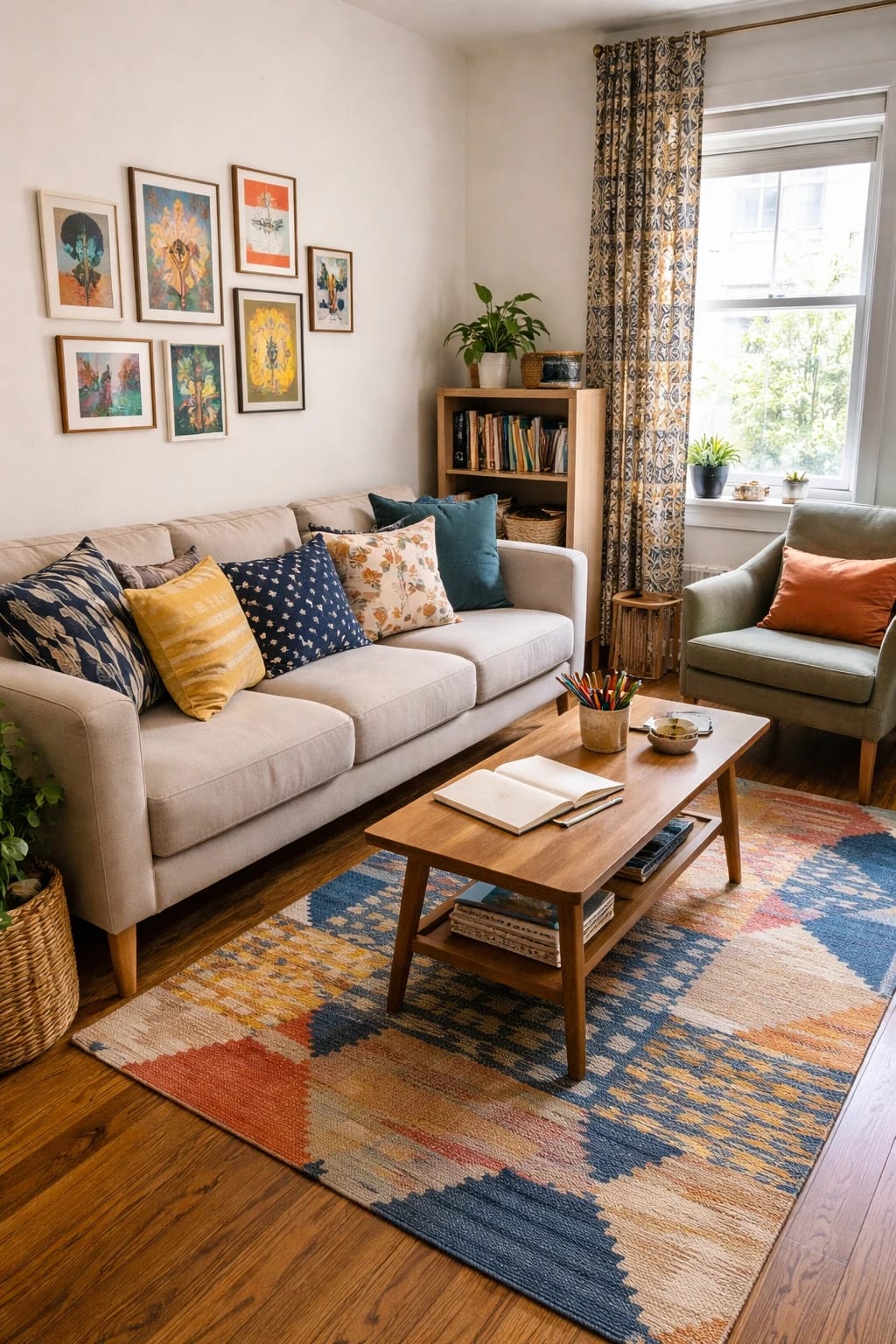
Okay so I need to tell you something before we get into any of this.
My Aesthetic Living Room Decor Ideas looked absolutely terrible for two years. Not like oh it just needs a few tweaks terrible — I mean truly, painfully beige. The kind of beige that doesn’t even commit to being a color. I had one sad succulent that I’d already killed twice, a throw pillow that came with the sofa so I just… kept it there, and a floor lamp I bought for $19 that flickered like a horror movie.
I wasn’t broke. I wasn’t even that busy. I just didn’t know where to start, so I started nowhere.
Then one afternoon I sat down in that living room after a particularly rough week, looked around, and thought — this place makes me feel nothing. Not bad, not good. Just nothing. And honestly that felt worse than if it had been actively bad.
That was the wake-up call.
Since then I’ve gone deep on this stuff. Embarrassingly deep. I’ve read through more interior design trend reports than any reasonable person should. I’ve followed designers on Instagram at 2am. I’ve tested things, regretted things, and eventually landed on what actually works versus what just looks good in a mood board.
Everything I learned is in this article. Thirteen ideas — real ones, not the generic add a plant and a throw blanket stuff you’ve read seventeen times already. Some of these will cost you almost nothing. Some will change your entire room. And a couple of them genuinely surprised me.
Let’s get into it.
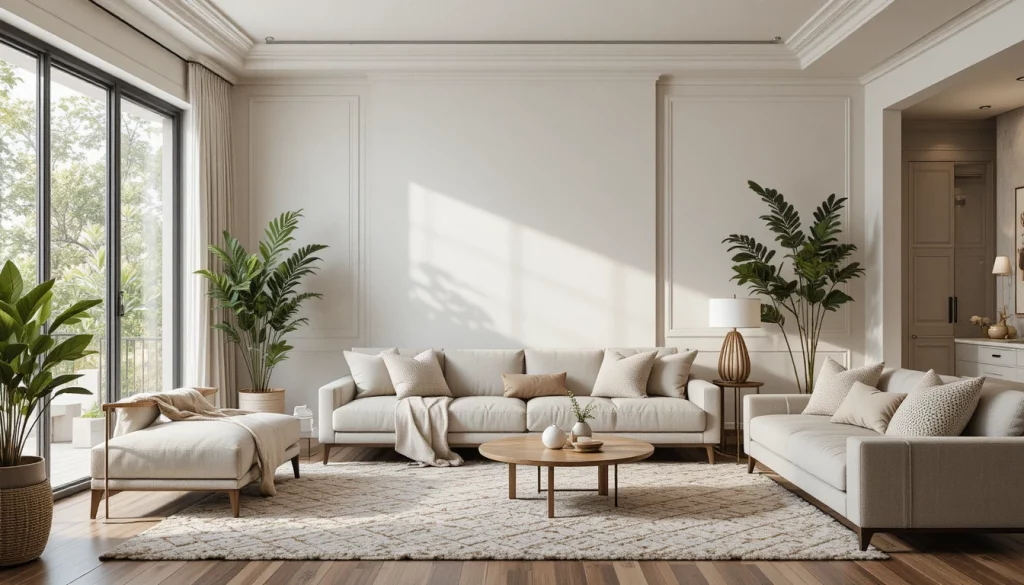
But First — What Does Aesthetic Even Mean Right Now?
Because it’s shifted, and if we’re not starting from the same place we’ll end up somewhere weird.
Three years ago, aesthetic living room basically meant a neutral Instagram setup that looked great in photos and slightly uncomfortable to actually sit in. You know the ones. Everything white. One artfully messy pile of coffee table books. A candle you’re not allowed to light.
That’s done. Over. Finished.
What people actually want from their living rooms in 2026 is something different — spaces that feel calm, personal, and genuinely restful. The design world has this phrase for it right now: quiet luxury. Less noise, more quality. Fewer things, better things. Rooms that take care of you, not rooms that perform for an audience.
The other big shift is what designers are calling biophilic design — basically the idea that we’re all a little nature-deprived and our homes should fix that. More natural materials. More greenery. More daylight. More of everything that reminds your nervous system it doesn’t need to be on high alert 24/7.
Between those two ideas, the aesthetic living room of right now is warm, layered, a little imperfect, and deeply intentional. Not a showroom. A home.
Okay. Now the ideas.
11 Aesthetic Living Room Decor Ideas Step by Step Guide
01. Stop Decorating Around Cold Gray — It’s Not Doing You Any Favors
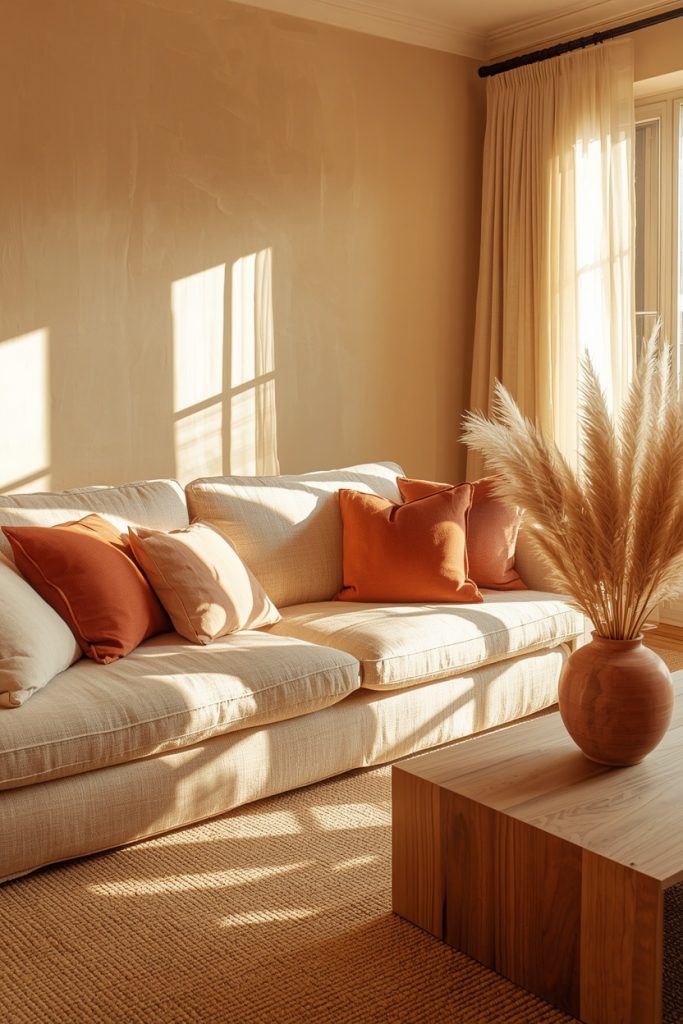
Here’s something I wish someone had told me earlier: the reason my living room felt so flat and joyless for so long had nothing to do with my furniture or my artwork or my lighting.
It was the rug. A cool-toned gray rug I’d bought because it felt safe. Safe and — as I eventually realized — completely dead. It was quietly draining the warmth out of every single thing around it.
Cool-toned grays had their moment. That moment was approximately 2014 to 2020. They’ve been slowly dying since and in 2026 they’re genuinely on their way out among people who pay close attention to these things. What’s replacing them is much better anyway — warm neutrals that actually make a room feel alive.
Cream. Warm sand. Soft mushroom. Aged linen. A whisper of terracotta. These aren’t dramatic colors — they don’t demand anything from you. But they have this quality where they catch light differently throughout the day. Your room looks different at 8am than it does at 6pm, and somehow both versions are beautiful. A cool gray room looks the same depressing shade all day.
The practical move here is to build your palette from the warmest surface you already own and match outward from there. If your sofa is warm beige, pull warm beige into your cushions, your rug, your curtains. Different shades and different textures of the same warm family — that’s where the magic is.
And whatever you do, don’t mix warm neutrals with cool-toned pieces. A cream sofa against a gray rug creates this visual tension that you’ll sense but never be able to name. It just looks wrong at a frequency that makes you vaguely uncomfortable in your own home. I’ve been there. Don’t.
If your budget is tight: A warm-toned throw draped over a cool-toned sofa — like a soft camel or oatmeal knit — can warm up the whole palette without replacing anything.
02. Texture Is the Thing Nobody Talks About Enough
Can I tell you the fastest way to spot a room that was decorated by someone who really knows what they’re doing versus someone just following trends?
Texture. Or more specifically, the layering of it.
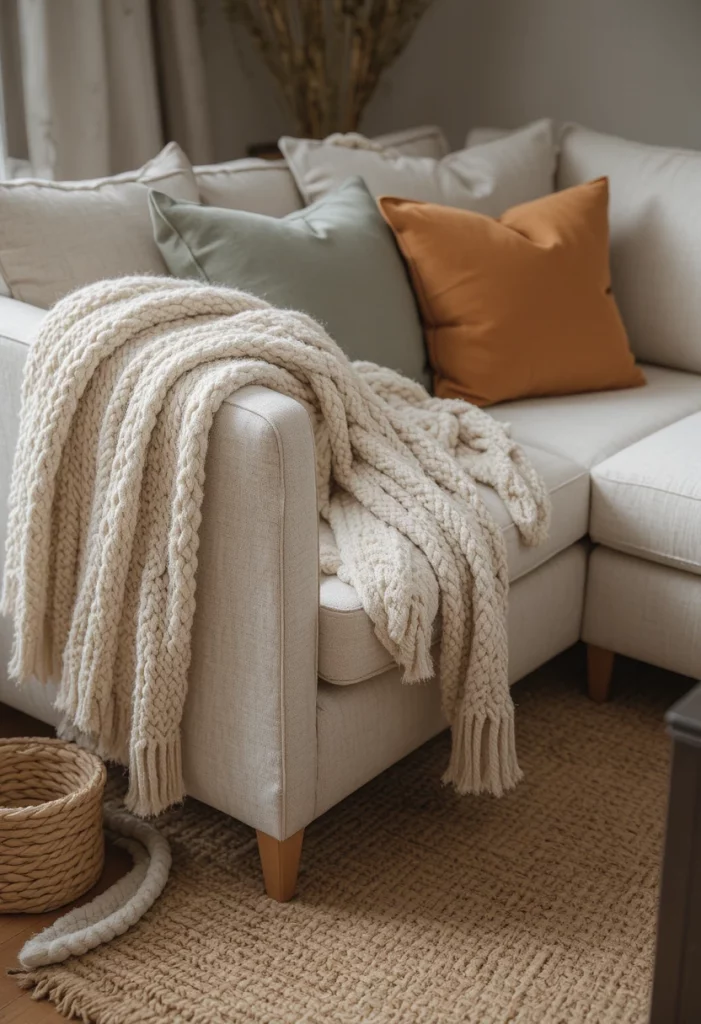
Walk into a room that looks rich and expensive and genuinely beautiful and you’ll notice — almost subconsciously — that there are several different materials working together. A rough jute rug. A smooth linen sofa. A chunky knit throw. Velvet cushions. A woven basket. A wooden tray. Each material has a different surface, and your eyes — without you consciously directing them — travel around the room taking all of this in.
That movement is what creates the feeling of a layered, interesting, beautiful space. Without it, your eyes hit the room and immediately bounce back. Nothing to explore. Nothing to linger on.
The rule that took me a while to figure out: vary the texture, hold the palette. Keep your colors in a tight family of two or three tones and then go wild with the materials. A cream room with five different textures looks intentional and luxurious. A cream room with only one texture looks like a waiting room.
Where to start without spending a lot: honestly, a chunky knit throw. Drape it over one arm of your sofa — not folded perfectly, just casually draped, like you just used it and put it down. That single item adds warmth, softness, something hand-made feeling, something inviting. It costs $20–$30 from pretty much anywhere. The effect it has on a room is genuinely out of proportion to its price.
Don’t do this though: Buying all your textured items in different colors. Three different textures in the same warm neutral = polished. Three different textures in three different colors = a mess that’s hard to recover from.
03. Minimalism — But the Warm Kind That You Can Actually Live In
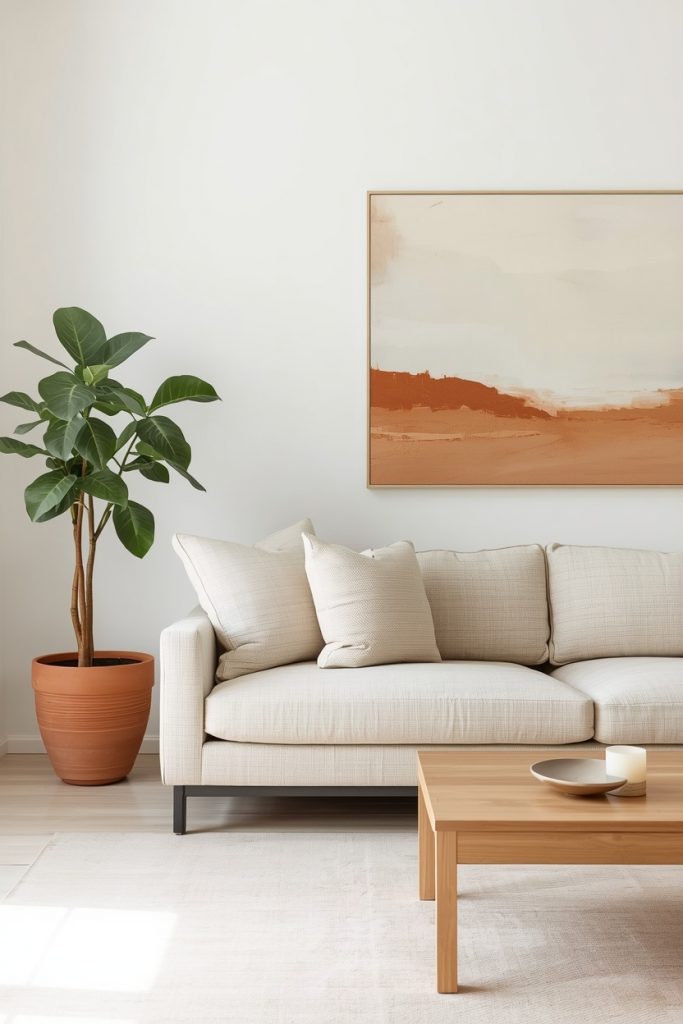
There is a version of minimalism that I find genuinely miserable. All white. No plants. One single object on every surface, perfectly centered. It looks incredible in a photograph and like a place where joy goes to die in real life.
That’s not what I’m suggesting.
Warm minimalism is different. It’s about editing, not emptying. The difference is — in an empty room, you notice the absence of things. In an edited room, you notice the things that are there. Every object earns its place. Every surface has breathing space but isn’t barren.
The way to get there is to start with a ruthless edit. Go through every decorative item in your living room and hold it, look at it, and decide: do I actually love this, or is it just here because it was already here? Anything in the second category — out. Not in a drawer where it will haunt you. Out.
I did this about eighteen months ago and pulled out an embarrassing amount of stuff I didn’t even remember acquiring. A decorative bowl with nothing in it that had been sitting in the same spot for three years. A framed print I never liked but felt guilty about taking down because it was a gift. Four books I will definitely never read that were on the shelf purely for visual reasons. Out, out, out, out.
What remained was a room with actual breathing space. And then I could see what it actually needed — one beautiful lamp, a plant with some personality, two or three things I genuinely cared about. That clarity is impossible when your surfaces are full of things you feel neutral about.
The most powerful decorating move that costs nothing: Declutter. I mean it. A decluttered average room beats a fully furnished beautiful room that’s cluttered. Every single time.
04. The Plant Thing Is Real — Here’s How to Actually Do It
I used to be skeptical about the plant trend. It felt like something people did because Pinterest told them to, not because it made a genuine difference.
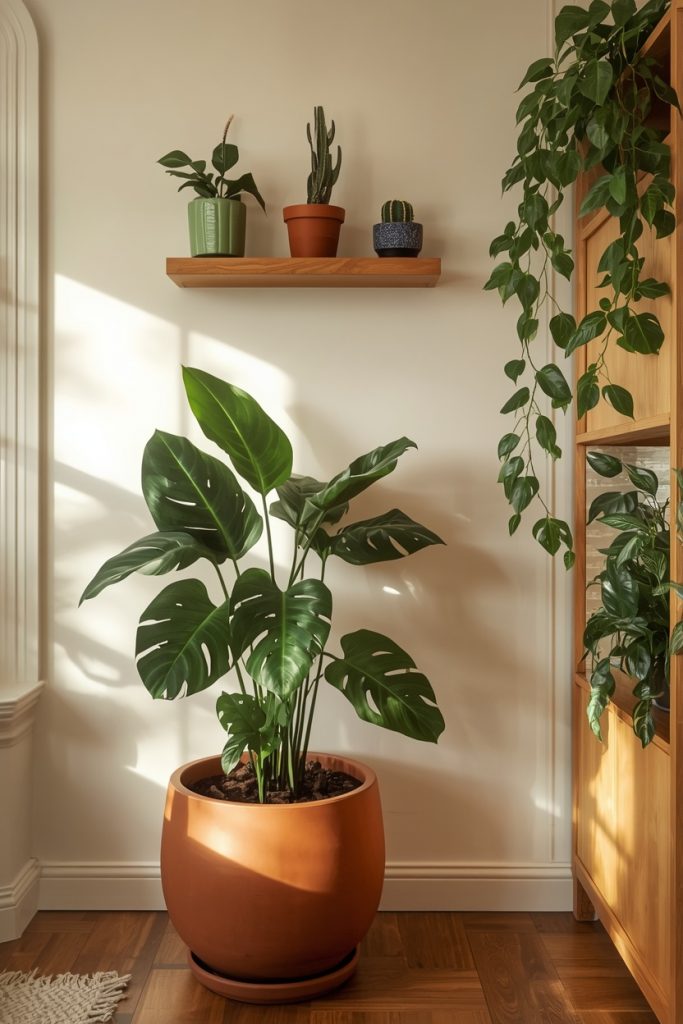
Then I added a large monstera to the corner of my living room. A proper one, in a big terracotta pot, taking up actual space. And within about three days I noticed something — I was spending more time in that room. Not consciously seeking it out, just… gravitating toward it. It felt different. More alive.
There’s real science behind this. Indoor plants measurably reduce cortisol, soften the acoustics of hard rooms, and create what researchers describe as an involuntary restorative response — basically your nervous system noticing you’re somewhere with living things and deciding it can relax a little. This isn’t marketing language. It’s biology.
The important thing is doing it properly, not tokenistically. One small succulent on a shelf won’t do this. What you want is presence. A large statement plant — monstera, fiddle leaf fig, olive tree, birds of paradise — anchoring one corner. Then a cluster of smaller plants on a shelf or side table, grouped in odd numbers. Then if you can, one trailing plant high up somewhere — a pothos or ivy draping naturally downward.
That combination, all in the same room, creates something that genuinely feels different to be inside.
For people who kill every plant they touch: Pothos. Snake plant. ZZ plant. These three survive in low light, irregular watering, and almost complete neglect. In fact, the ZZ plant genuinely prefers being left alone. Finally, something that understands introversion.
You can find good-sized plants at local nurseries, farmers markets, or IKEA for $8–$20. You don’t need rare plants. You need the right sizes in the right places.
You may also like: 23 Green and Beige Living Room Designs – 13 Stunning Green and Yellow Living Room Ideas – 17 Colorful Bedroom Ideas That Will Transform Your Space Overnight
05. Your Lighting Is Probably the Problem and Here’s How to Fix It for $8
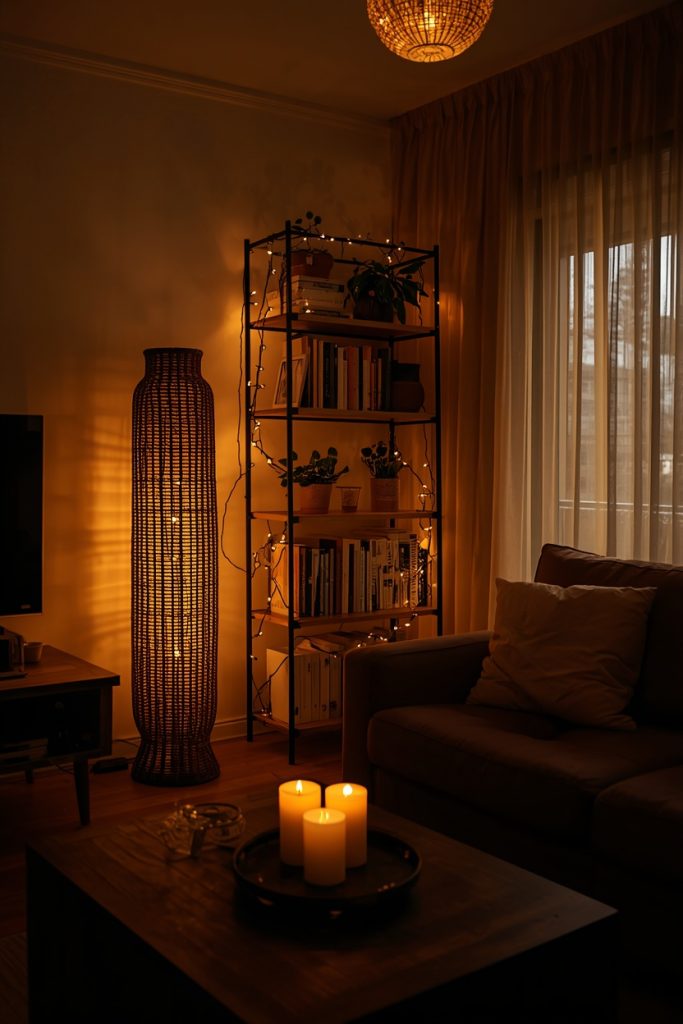
I want you to do something right now, if you’re reading this at home.
Turn on every light in your living room. All of them. Then take a picture.
If it looks flat, slightly clinical, and oddly joyless — that’s your lighting. That’s not your furniture, that’s not your decor, that’s not your taste. It’s the light. And it’s fixable.
Most living rooms make the same mistake: one overhead light, often with a cool-white bulb, flooding the room from a single direction. This creates flat, even, completely lifeless illumination. It’s fine for seeing things. It’s terrible for feeling anything.
What you want instead is layers. Multiple light sources at different heights, all warm-toned, working together. An overhead light on a dimmer, kept low in the evenings. A floor lamp in the darkest corner, creating a pool of warmth. A small table lamp on a bookshelf or side table. A candle or two on the coffee table for evenings. Fairy lights along a shelf if you’re going for something a little more atmospheric.
The combination of all of these together at different heights creates depth, shadow, and a warmth that genuinely changes how a room feels to be inside of.
The $8 move: Go buy warm-toned LED bulbs — 2700K or 3000K — and swap out every bulb in your living room. Do it today. Your room tonight will look completely different to your room last night. It’s the fastest, cheapest, most dramatic improvement you can make.
Never, ever use cool-white bulbs in a living room. I cannot emphasize this enough. They make everything look like a supermarket.
06. A Gallery Wall Can Look Amazing or Look Like a Panic — Here’s the Difference
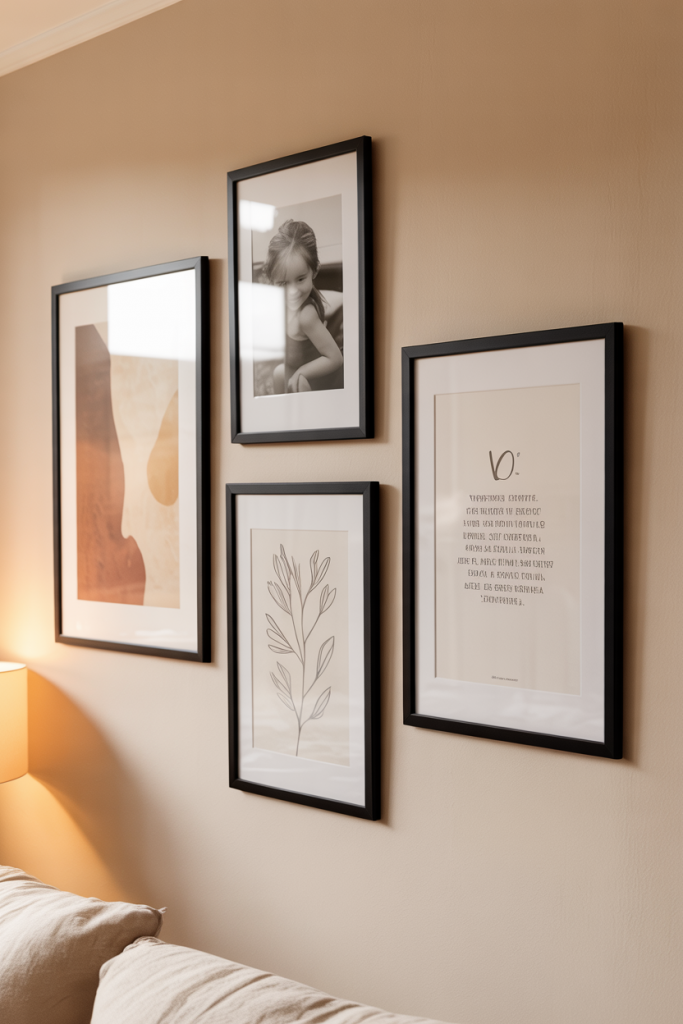
The difference between a gallery wall that makes people stop and go oh that’s beautiful and a gallery wall that looks like someone got overwhelmed and just started hammering nails is not the art.
It’s the editing.
Pick one frame finish and commit. All black, all natural wood, all white, all thin gold. Once you commit to that finish, you can mix absolutely every size and proportion of frame and it will still look intentional, because the consistent finish ties them together.
Before you put a single thing on the wall: lay it all out on the floor. Arrange and rearrange until the balance feels right — heavier frames toward the middle or lower half, lighter ones toward the outside, a mix of portrait and landscape orientations. Take a photo of the layout you like. Then hang it, using the photo as your guide.
Keep consistent gaps — about two to three inches between frames. Get a ruler. I know that sounds like the most boring advice I’ve given yet, but inconsistent spacing is the one thing that makes gallery walls look messy even when everything else is right.
For the content: mix it. An abstract print. A personal photo. A botanical illustration. A short typographic quote in simple font. A small mirror in a matching frame. The variety in content is interesting — the consistent frames hold it together.
07. Japandi: The Style That Feels Like Your Nervous System Finally Relaxing
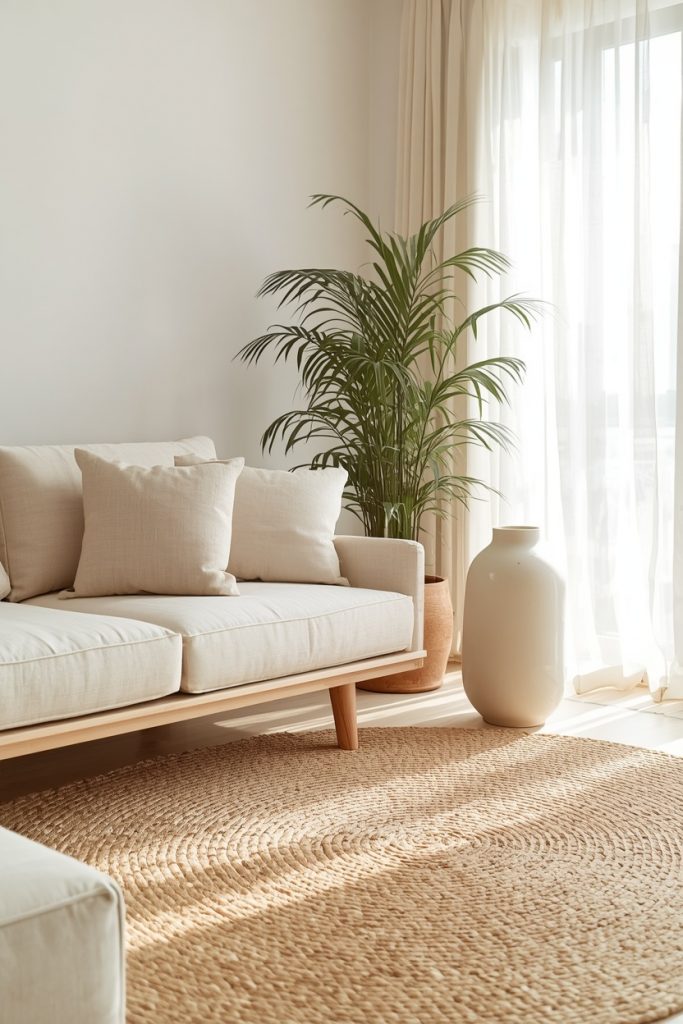
I didn’t think I’d become a Japandi person. And yet.
Japandi is what happens when Japanese wabi-sabi minimalism and Scandinavian hygge design philosophy fall in love and move in together. Japan brings the restraint and the reverence for craft. Scandinavia brings the warmth and the materials. The result is rooms that are visually very quiet and somehow emotionally very rich at the same time — which is incredibly hard to achieve and instantly obvious when you walk into it.
The palette is entirely borrowed from nature. Warm white. Pale ash or oak wood. Soft sage green. Charcoal gray used very sparingly. The occasional terracotta vessel. Never anything bright. Never anything shiny.
The furniture sits low. The lines are clean. The craftsmanship is visible — you can see the grain of the wood, the slight irregularity of handmade ceramics, the texture variation in a woven rug. These imperfections aren’t problems. They’re the whole point. A handmade ceramic bowl that’s slightly lopsided communicates something that a factory-perfect bowl never can: someone made this. Someone’s hands touched it.
If your living room currently feels anxious or overstimulating — if you walk in and feel like you should be doing something rather than resting — Japandi is the antidote. It’s the most serene aesthetic in the design world right now, and it’s not even close.
Where to start without fully committing: Add one handmade ceramic piece a mug, a small vase, a bowl with a rough glaze . Replace one glossy or plastic item with something in natural wood. See how it feels. You’ll probably want more.
08. One Statement Piece — Pick Your Fighter
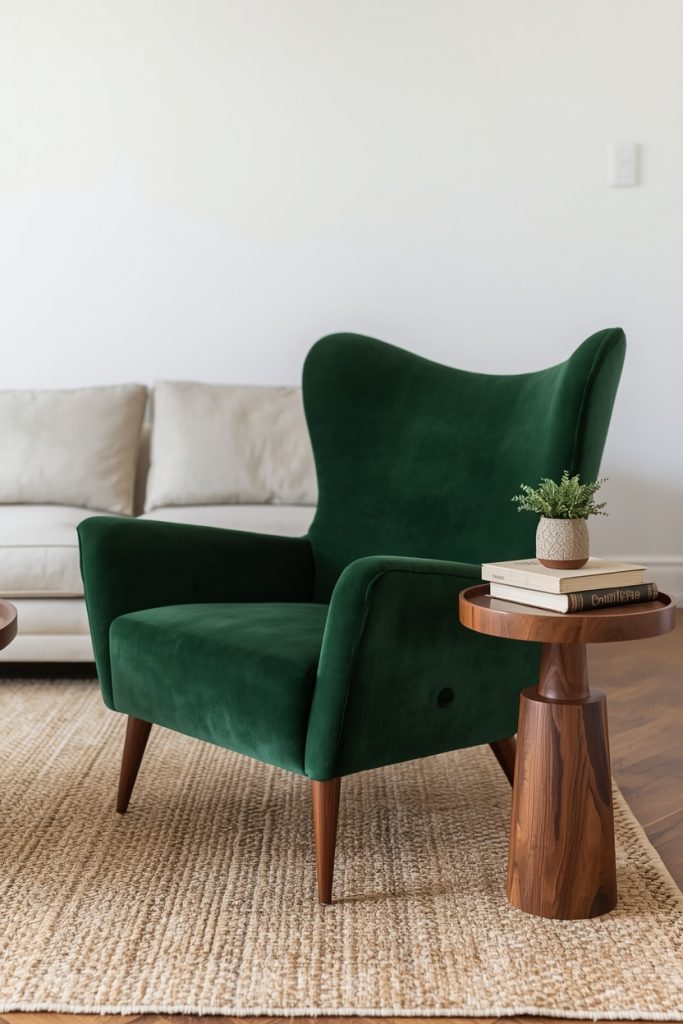
Every room needs one thing that owns the space. The thing your eyes go to first. The thing guests notice and bring up later. The thing that makes the room feel decided rather than assembled.
It doesn’t need to be expensive. It needs to be confident.
An oversized piece of abstract art that fills the main wall. A velvet armchair in a color that makes you feel something — deep emerald, warm terracotta, dusty plum. A sculptural coffee table with interesting legs and a shape that doesn’t just sit there quietly. A vintage wooden chest that doubles as a coffee table and carries about forty years of visual interest.
The trap people fall into is wanting two or three statement pieces because they love all of them equally. I understand this completely and I’m telling you: resist it. Two statement pieces argue with each other. Three is a shouting match. One statement piece is a conversation you actually want to have.
Keep everything else in the room quiet — neutral, simple, understated. The statement piece gets to be exactly that because it has nothing competing with it.
For inspiration on this, Homes & Gardens’ living room trends coverage has done some genuinely beautiful work on statement furniture pieces for 2026.
09. Modern Boho: How to Do It Without It Looking Overwhelming
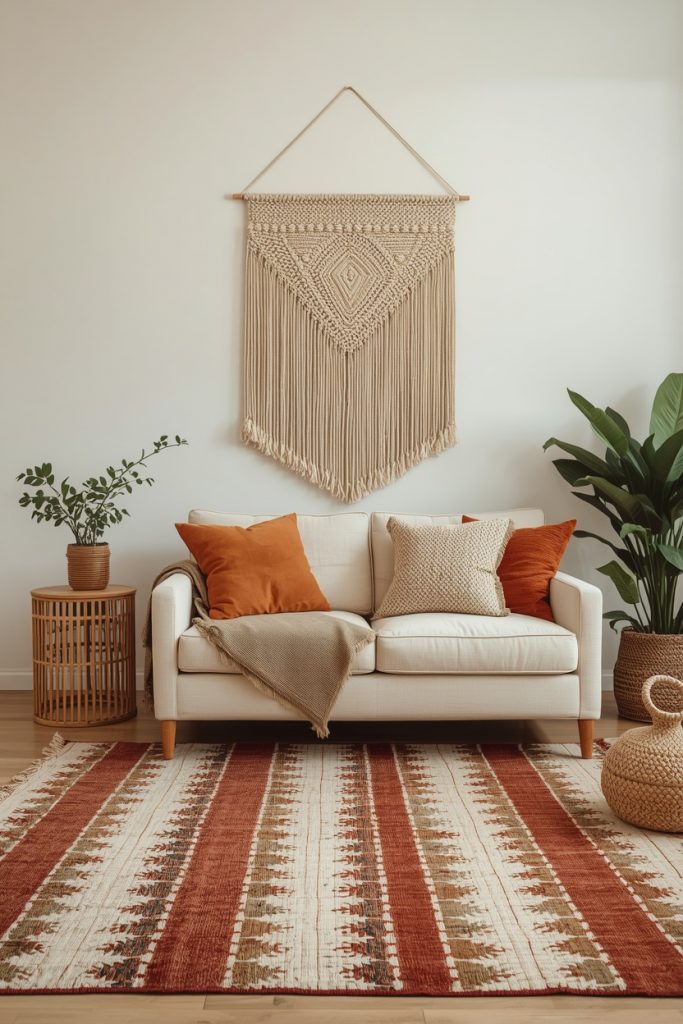
Classic boho has this problem where people see the word boho and think it means more is more. More patterns. More macrame. More plants. More crystals. More rattan. More of everything simultaneously.
The result is rooms that feel exciting for about three minutes and then exhausting.
Modern boho is edited. It keeps the soul of boho — the handmade quality, the earthy warmth, the sense of things collected rather than purchased all at once — but it exercises judgment. One macrame wall hanging, not six. A rattan side table, not rattan everything in the room. A kilim-style rug in rust and cream, not four different patterns on the floor fighting each other.
The color story anchors everything: warm terracotta, soft rust, dusty sage, honey, warm brown. These tones feel natural and sun-warmed and like the room has been slowly gathered over years of interesting living. Which is exactly the feeling you want.
Where to find genuine boho pieces without spending a lot: Weekend markets, Etsy for handmade ceramics and macrame, vintage and second-hand shops for rattan and wicker pieces that have actual character. Things that look slightly worn or slightly handmade are better than things that look brand new in this particular aesthetic. Imperfection is a feature.
10. The Cozy Corner — Small Investment, Ridiculous Return
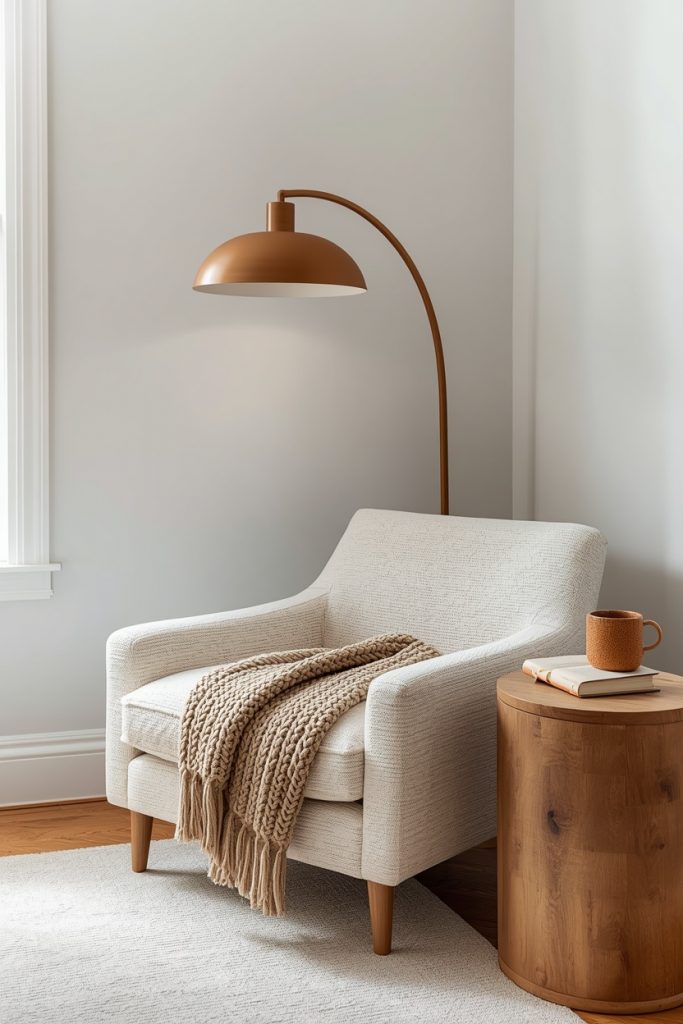
Out of everything in this article, this is the idea that will change how you feel about being home the most. And it’s probably the simplest.
A cozy corner is a small, intentional spot in your living room that exists for one purpose: for you to rest in. A comfortable chair, sized right for one person. A side table tall enough for a mug. A lamp that makes reading easy. A soft throw. That’s all.
What happens when you build this is a little strange and a lot lovely. You suddenly have a place in your home that is specifically yours. Not the sofa where everyone sits and watches TV together. Not a desk where work happens. A chair, in a corner, for you. And you will use it more than you’d expect. Saturday mornings with coffee. Evenings after everyone else has gone to bed. Rainy afternoons with a book you’ve been putting off for weeks.
A boucle or textured armchair near a window works best. Add a small round wooden table beside it — just big enough for a drink and something to read. Put a floor lamp that you can angle over your shoulder for reading. Drape a throw over one arm casually, not like it was arranged, like it was used.
This corner will become your favorite part of your home. I’d genuinely bet on it.
11. Hang Your Curtains Higher Than You Think You Should
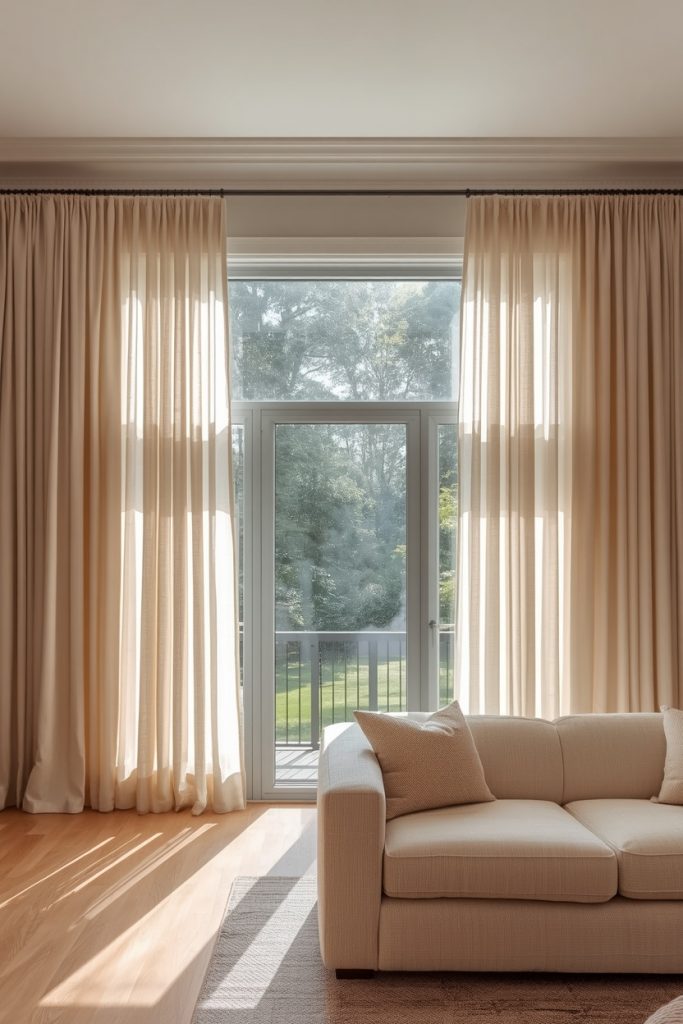
This is the tip that feels almost too simple to be worth mentioning, and yet it makes one of the most dramatic differences in any living room.
Most people hang curtain rods at window-frame height because that’s where the curtain is covering the window and that just… seems logical. But what this does to a room is make the ceilings look lower, the windows look smaller, and the whole space feel more compressed.
What designers do instead is hang the rod as high as physically possible — two to four inches below the ceiling, or right at the ceiling if the curtain weight allows it. And they hang curtains that fall all the way to the floor, going well past the window frame on each side.
The effect is immediate and genuinely dramatic. The room looks taller. The windows look larger. The whole space feels more considered and more expensive than it did five minutes ago.
Sheer linen or cotton voile in warm ivory or cream is ideal for this look. It’s soft enough to drape beautifully at that height, and it lets natural light filter through in a way that makes your whole room glow rather than feel dim and covered.
This change costs nothing extra — the hardware is identical whatever height you hang it. It just requires you to trust the process and put the rod higher than feels intuitive.
Things You Can Do This Weekend Under $50, All In
Because the best ideas are the ones you actually act on.
Change your light bulbs tonight. Warm-toned LEDs, 2700K. Every bulb in the room. $8 total, fifteen minutes. Your room tonight will look genuinely different.
Pick up one plant tomorrow. Snake plant, pothos, or monstera cutting. Put it somewhere it gets some natural light. Don’t overthink the pot. $10–$15.
Find a chunky throw. Charity shop, market, anywhere. Oatmeal, cream, or warm gray. Drape it over your sofa arm like you just used it. $8–$20.
Completely clear one surface. Coffee table or a shelf. Everything off. Put back only one or two things you genuinely love. Notice the difference immediately. Free.
Pull your sofa away from the wall. Even just six inches. Floating furniture looks designed. Furniture pushed flush against walls looks like it’s waiting to leave. Free, takes thirty seconds.
The Mistakes That Quietly Ruin Aesthetic Rooms
Matching sets. When every item comes from the same store collection, a room looks like a display. Mix sources, mix eras. Things gathered over time always look more interesting than things bought all at once.
A rug that’s too small. Probably the most common and most damaging mistake. Your rug should be large enough that at least the front legs of your sofa sit on it. A small rug floating in the middle of the room makes everything around it look wrong.
Relying only on overhead lighting. Flat, lifeless, not a living room feeling. Add floor lamps. Add table lamps. Dim things down in the evenings. Layer.
Too many trends at once. Pick two, maybe three from this list. Trying to do all thirteen simultaneously creates a room without any consistent identity. Better to do a few things really well than everything at once not quite right.
Forgetting that smell is part of aesthetic. A room that looks beautiful and smells faintly of a warm cedarwood or clean linen candle is more of an experience than a room that only looks beautiful. One candle or diffuser. It completes the whole thing in a way that’s hard to explain until you’ve experienced it.
The Questions Everyone Asks
What’s the most popular aesthetic living room style right now in 2026? Quiet luxury and Japandi are the two dominant movements. Both favor warm neutrals, natural materials, intentional simplicity, and spaces that feel restful rather than performative.
How do I make my living room aesthetic without spending much? Honest answer: declutter first free , rearrange your furniture free , change your light bulbs to warm-toned $8 , add one plant $12 , and find a chunky throw somewhere secondhand $10 . That’s under $35 and your room will look meaningfully different.
What colors are actually trending for living rooms in 2026? Warm neutrals — cream, sand, warm mushroom, soft terracotta. Cool-toned grays are genuinely on their way out. Earth tones are in and have staying power because they work with natural light in a way cooler tones don’t.
How many plants do I actually need? More than you think you do. One large floor plant anchoring a corner, two to three medium plants grouped on a shelf, one trailing plant somewhere elevated. That combination creates the biophilic effect people are going for. One small succulent doesn’t do it.
What is Japandi and why does everyone seem to love it suddenly? It’s Japanese minimalism meets Scandinavian coziness. Clean, intentional, handmade, warm, and made entirely from natural materials. It creates rooms that are visually quiet but emotionally very comforting — which is exactly what a lot of people need from their homes right now.
Is boho still a thing or is it over? Still a thing, but it’s evolved significantly. Modern boho is edited and restrained — one macrame statement piece, natural materials, earthy palette. The maximalist everything at once version of boho looks dated. The intentional version looks genuinely great.
Okay, One Last Thing
Your living room should be the room in your home that makes you exhale the second you walk in.
Not the room you’re waiting to fix. Not the room that’s almost there. The room that already feels like yours, right now, with what you have, making the small intentional decisions that add up to something you love.
Start with the lighting tonight. Add a plant this weekend. Grab a throw from somewhere secondhand. Clear one surface completely. None of this is expensive. None of it requires a renovation.
And for more inspo as you go — Homes & Gardens and Decorilla’s 2026 trends are both worth bookmarking. For visual mood boarding, Pinterest’s home design boards will give you more ideas than you’ll ever need.
Now go fix that lighting. Tonight. I promise you won’t regret it.